
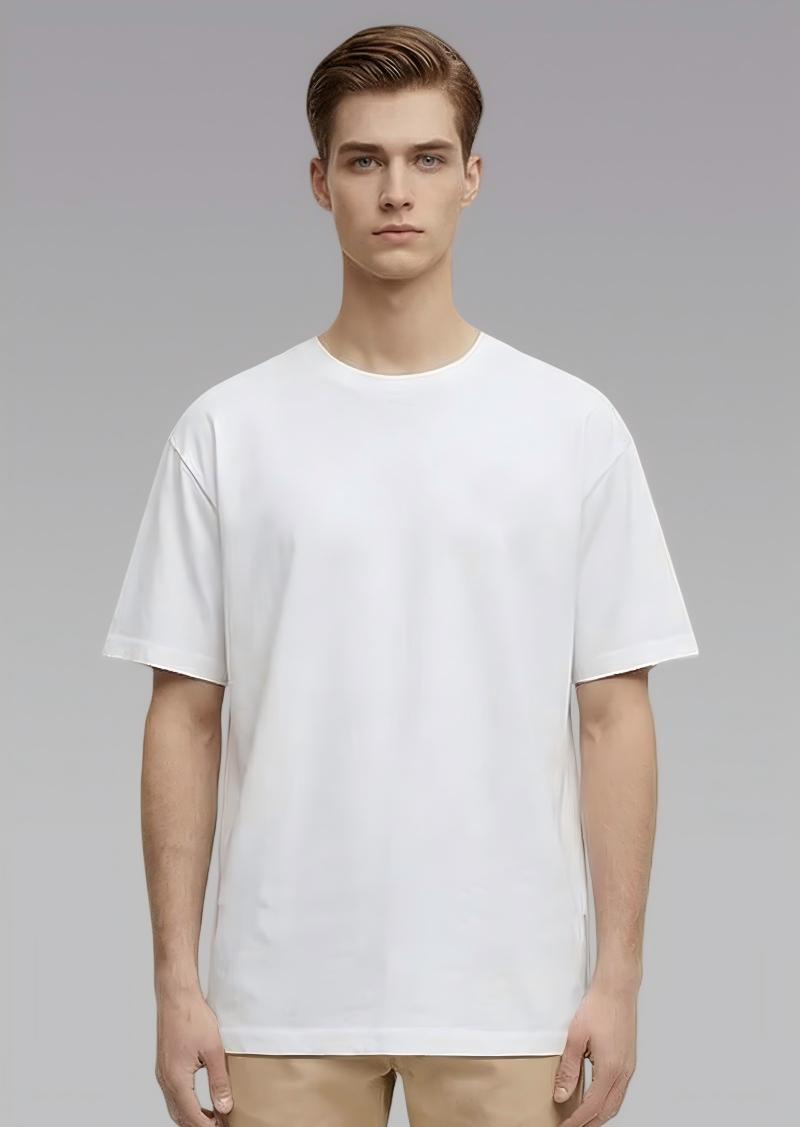
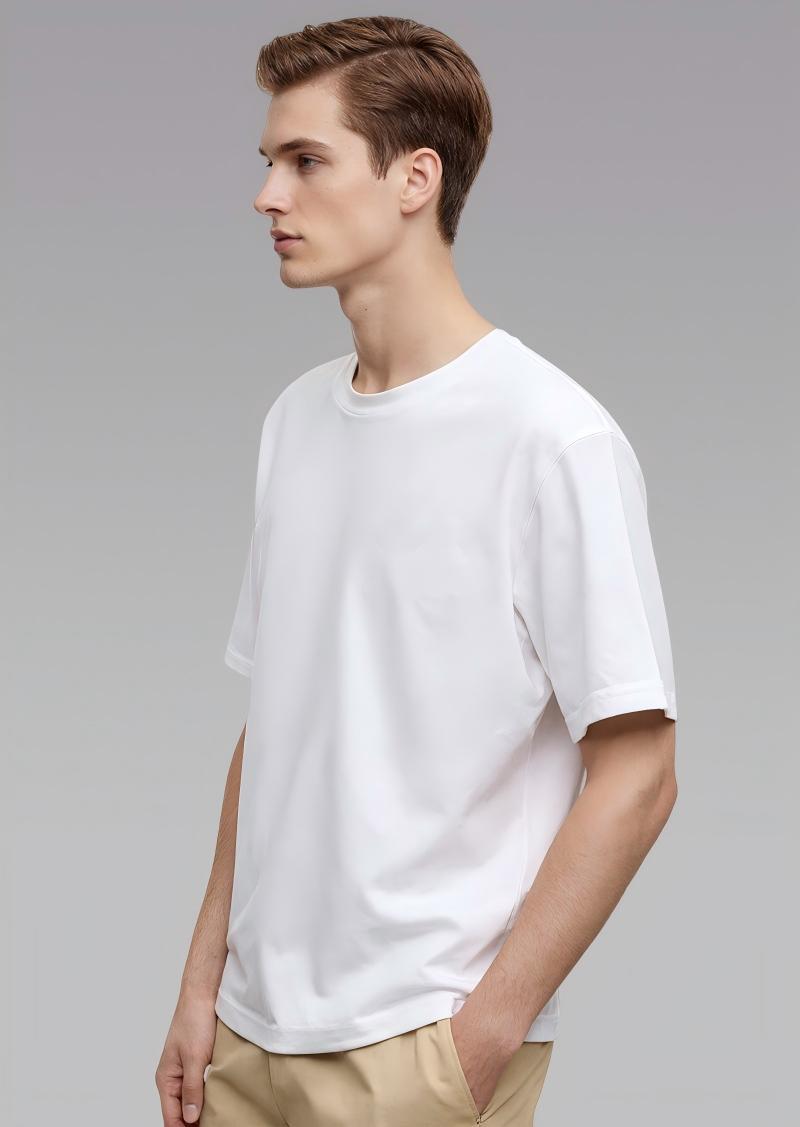
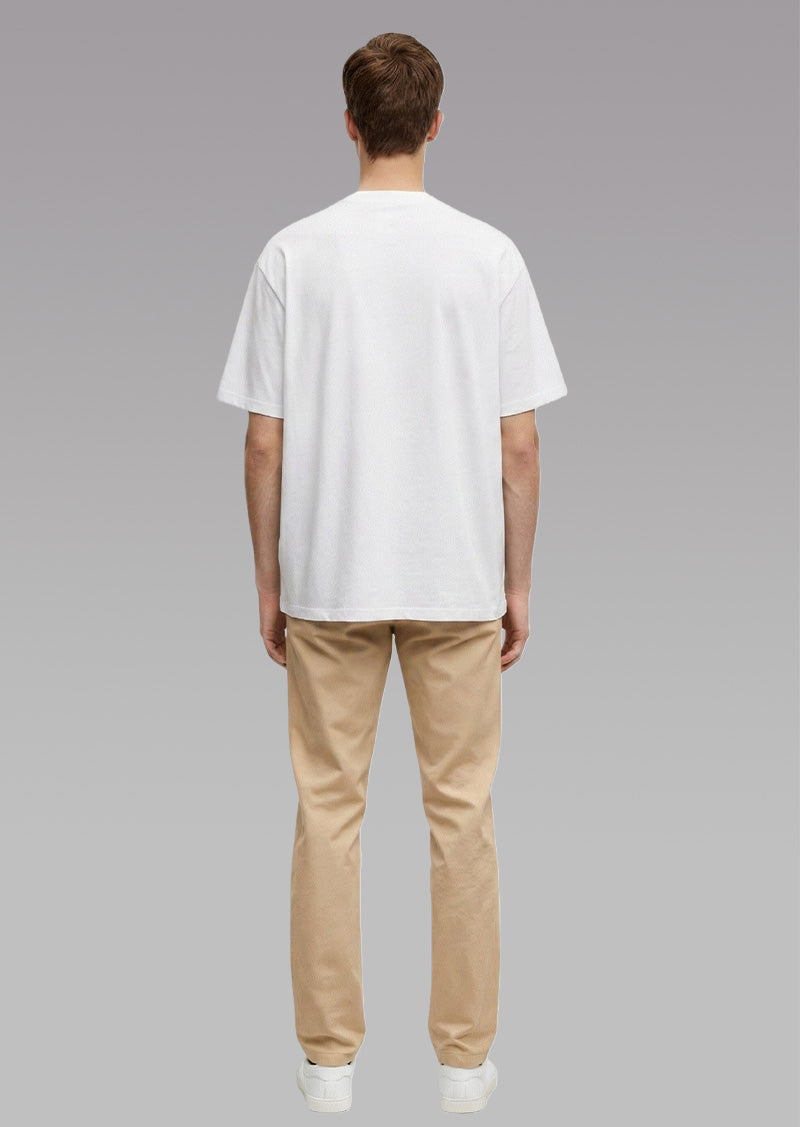
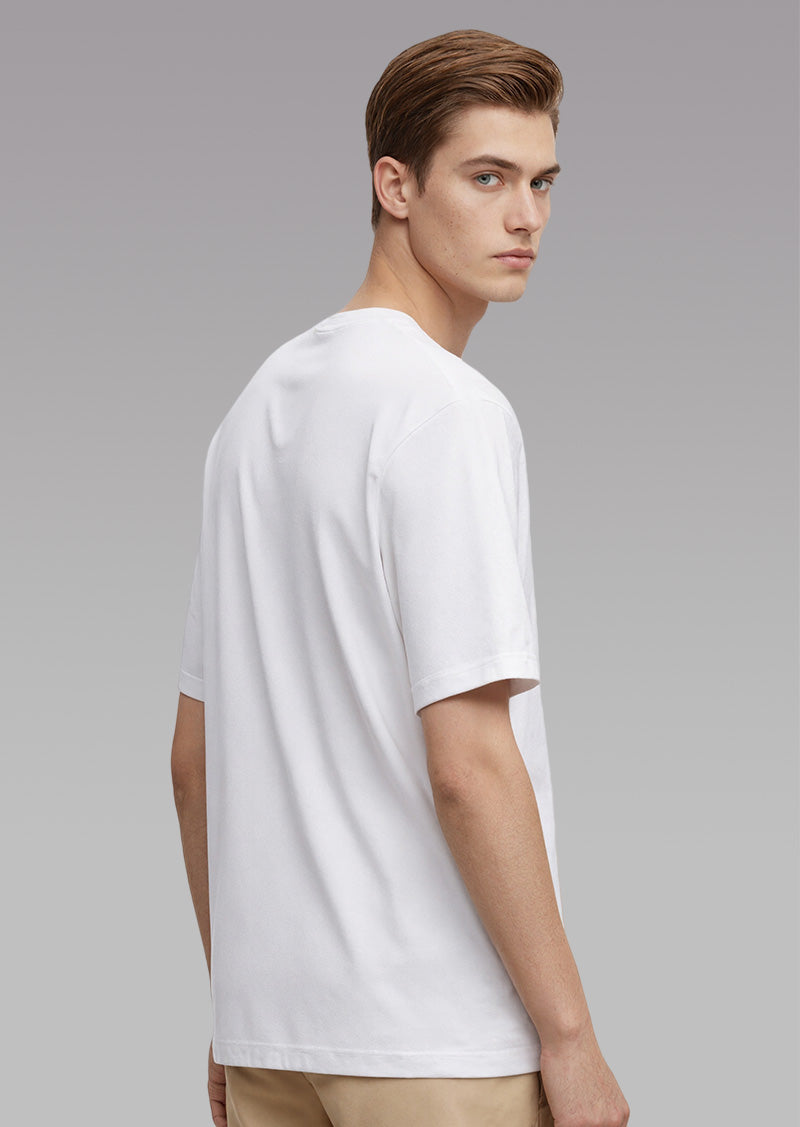
Custom Heavyweight Graphic T-Shirts for Streetwear Brands
Direct Order Requirements
- Minimum order: 50 pieces per artwork, per T-shirt color.
- Puff Print and Rubber Print: Available for simple 1–2 color designs only.
- Embroidery: Available for 1–2 color simple artwork or left-chest logos/text only.
- For photos, gradients, multi-color, or detailed artwork, large or multi-position embroidery, please choose DTG Printing or contact us for a custom quote.
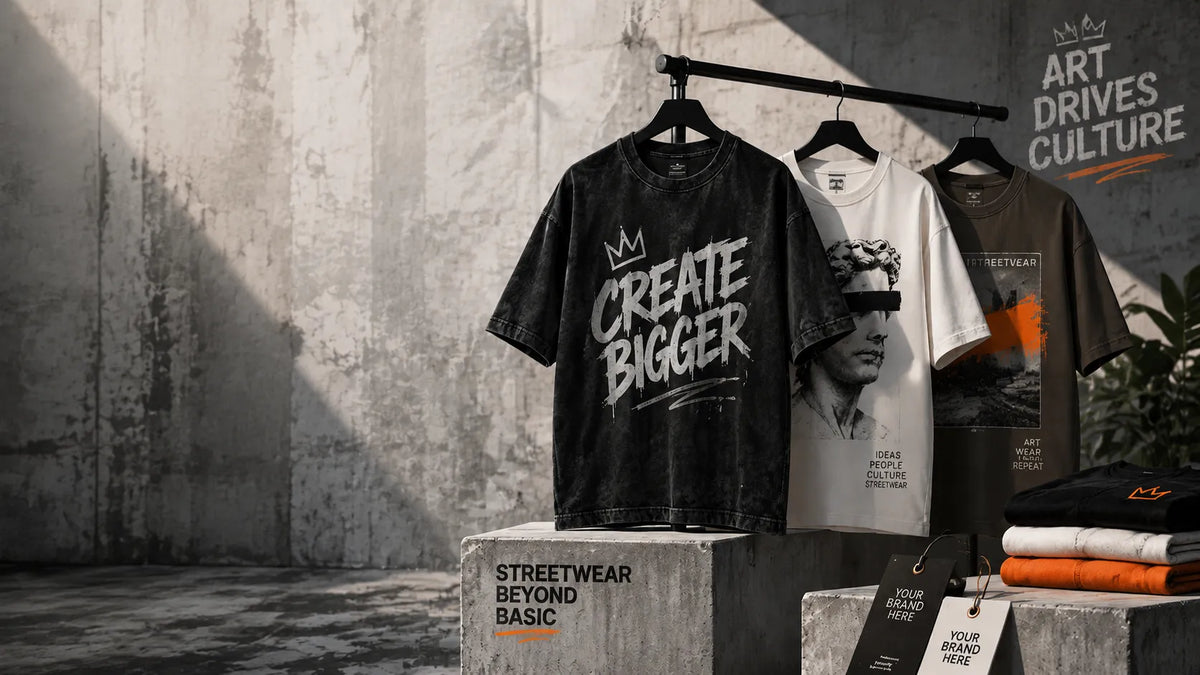
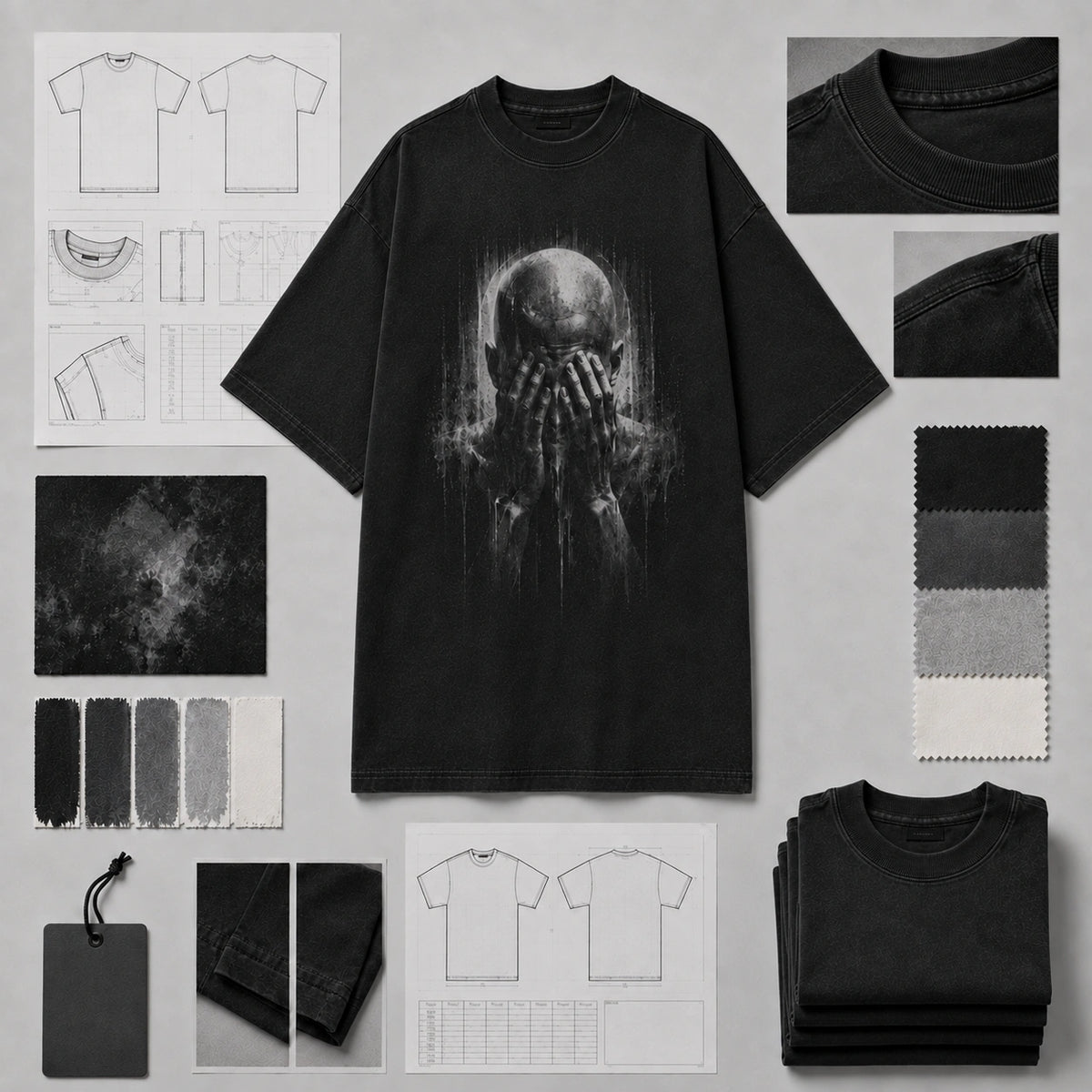
Not a Blank With a Logo. A Graphic Tee Built Around Your Brand.
Your graphic deserves more than a standard promotional blank.
We develop the fabric weight, shoulder line, body length, collar, wash and print method as one complete product. The result is a graphic tee that carries your brand identity through its fit and construction—not only through the artwork printed on top.
Use your tech pack, measurement chart, reference garment or visual direction as the starting point.
Your artwork. Your fit. Your label. Your finished product.
Choose the Weight. Control the Drape.
A convincing oversized tee needs controlled proportions. Making a regular T-shirt larger often creates the wrong shoulder angle, excess length and an unstable collar.
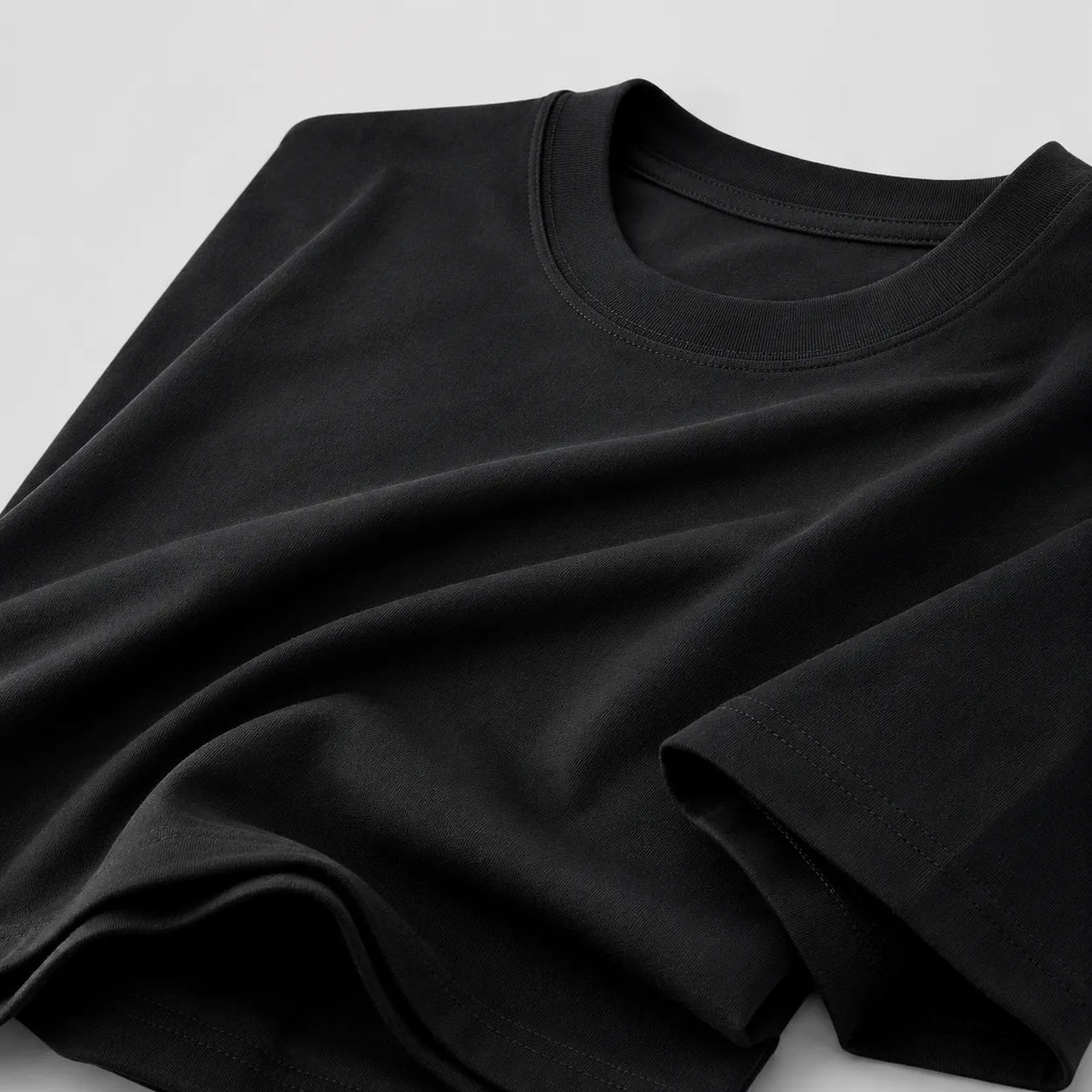
240 GSM — Balanced Heavyweight
A substantial hand-feel with comfortable movement. A practical choice for year-round graphic tees, warmer markets and first collections.
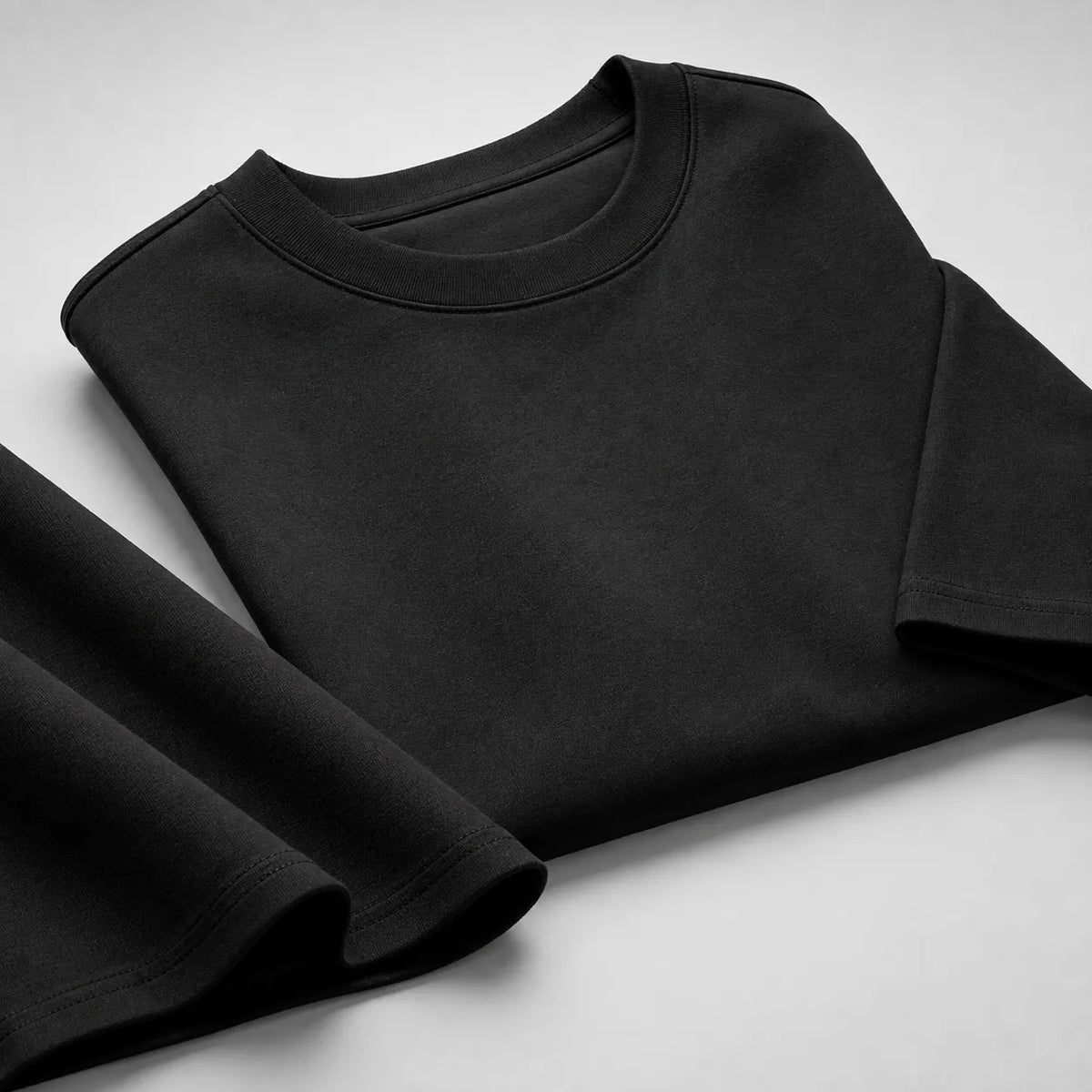
280 GSM — Structured Streetwear
More body and a stronger drape for oversized and drop-shoulder silhouettes. A versatile choice for premium graphic-led drops.
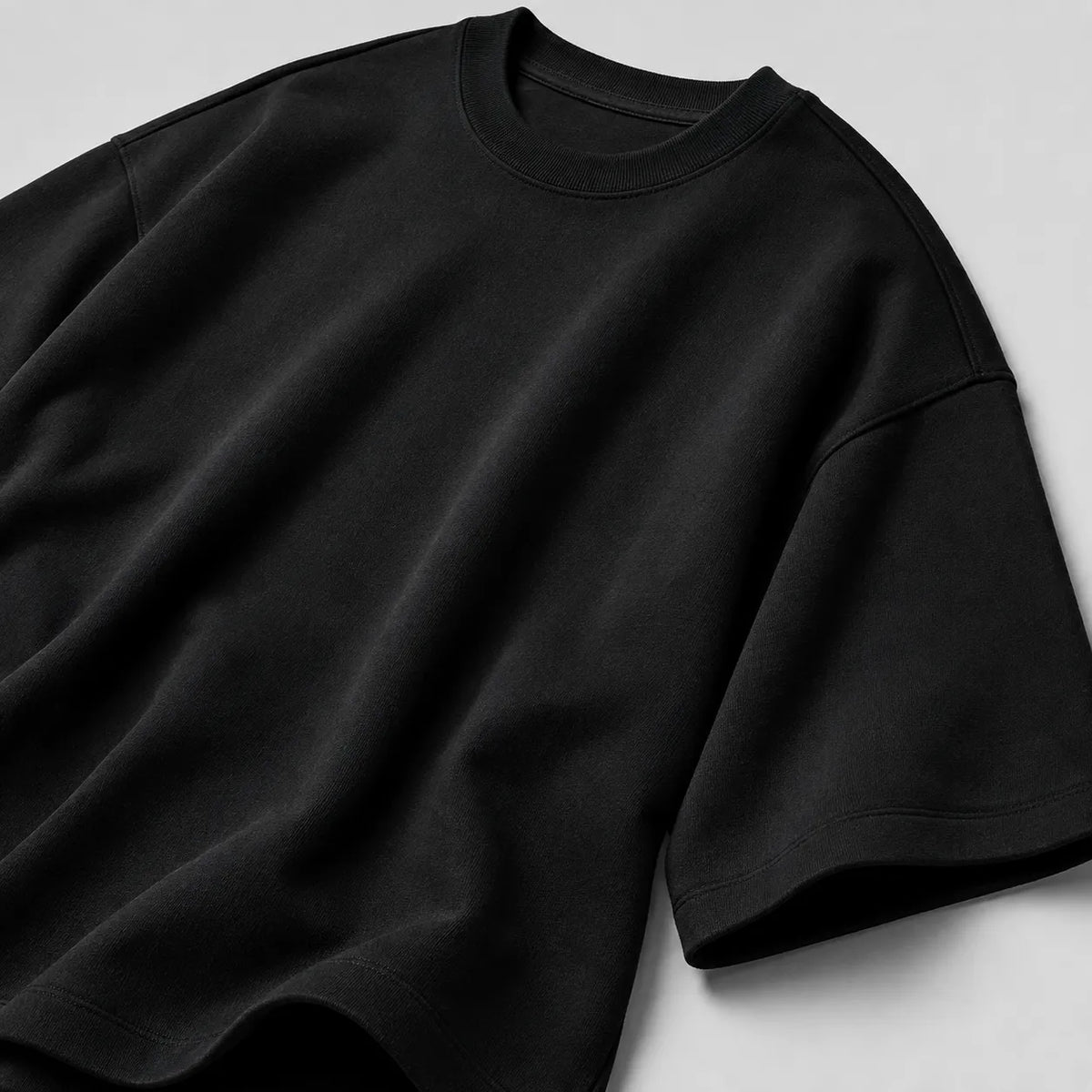
300–320 GSM — Extra Structure
Dense, firm and visually substantial. Best suited to boxy statement tees where collar recovery, shrinkage and print comfort are carefully sampled.
Fit Is Designed—Not Simply Sized Up.
GSM changes more than thickness. It affects structure, movement, print hand-feel, shipping weight and how premium the finished garment feels.
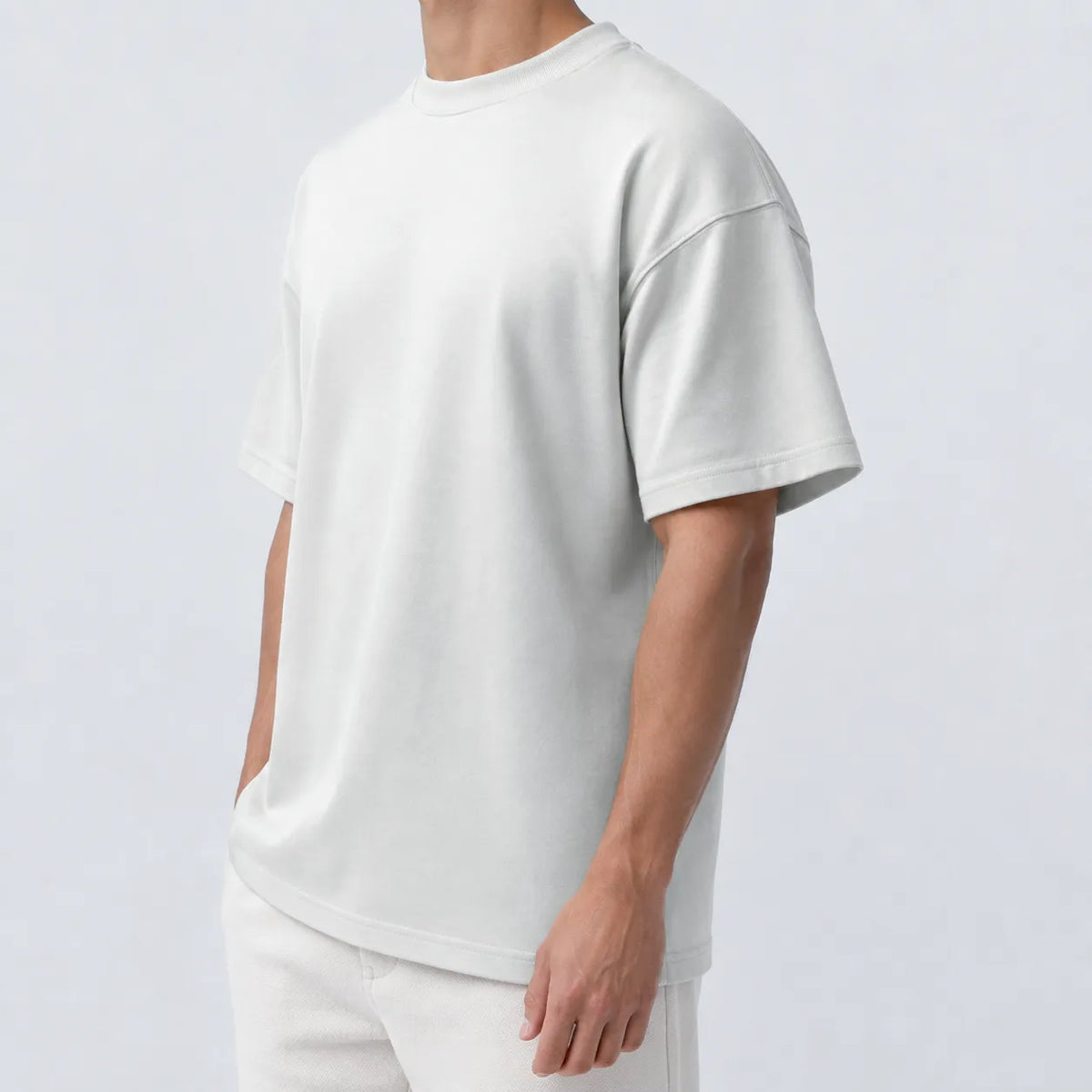
Dropped Shoulder
Positioned to create relaxed width without pulling the collar out of shape.
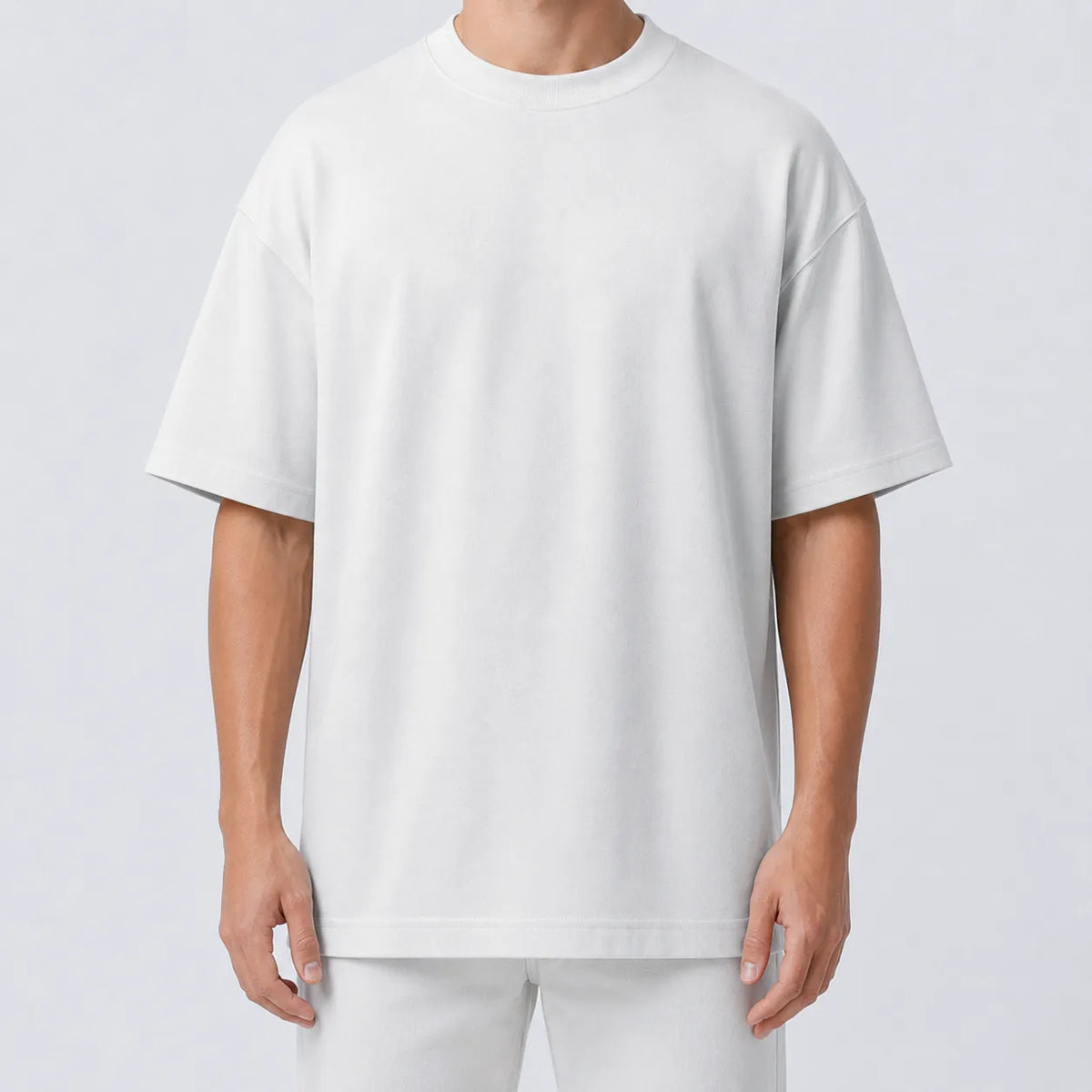
Boxy Body
Wider through the chest with controlled body length for an intentional silhouette.
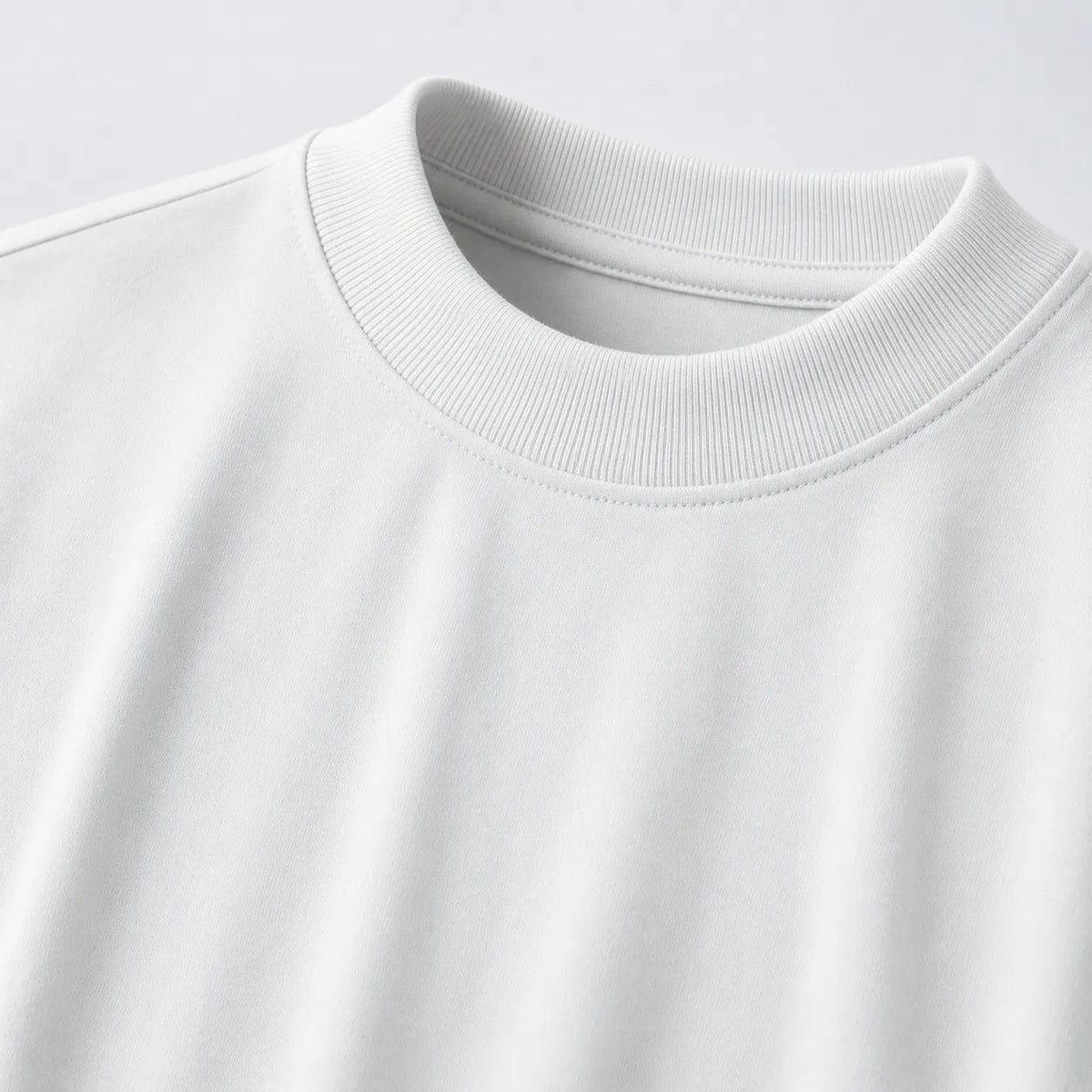
Heavy Rib Collar
Selected and tested to complement the garment weight and maintain recovery.
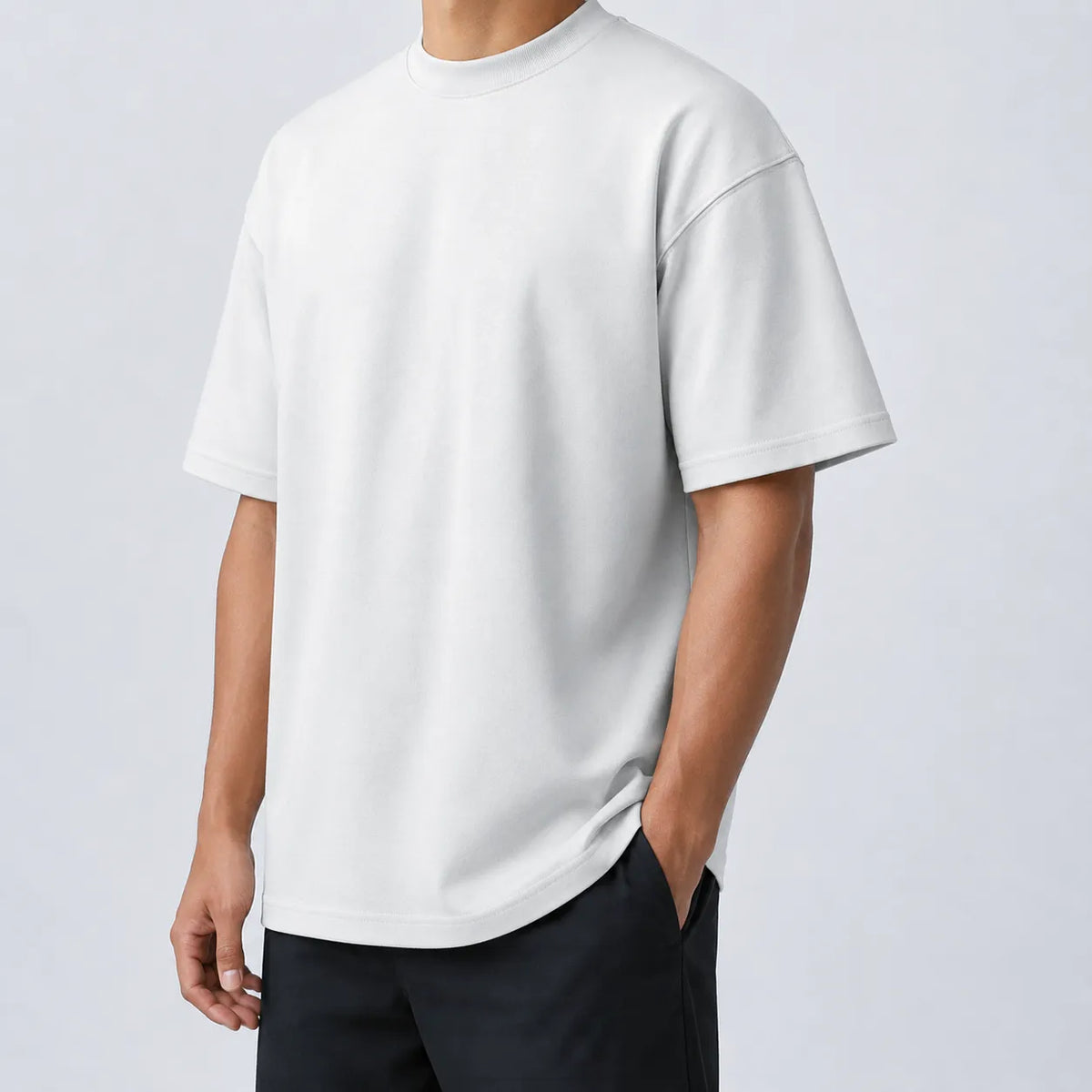
Sleeve Proportion
Balanced against shoulder width and body length—not graded independently.
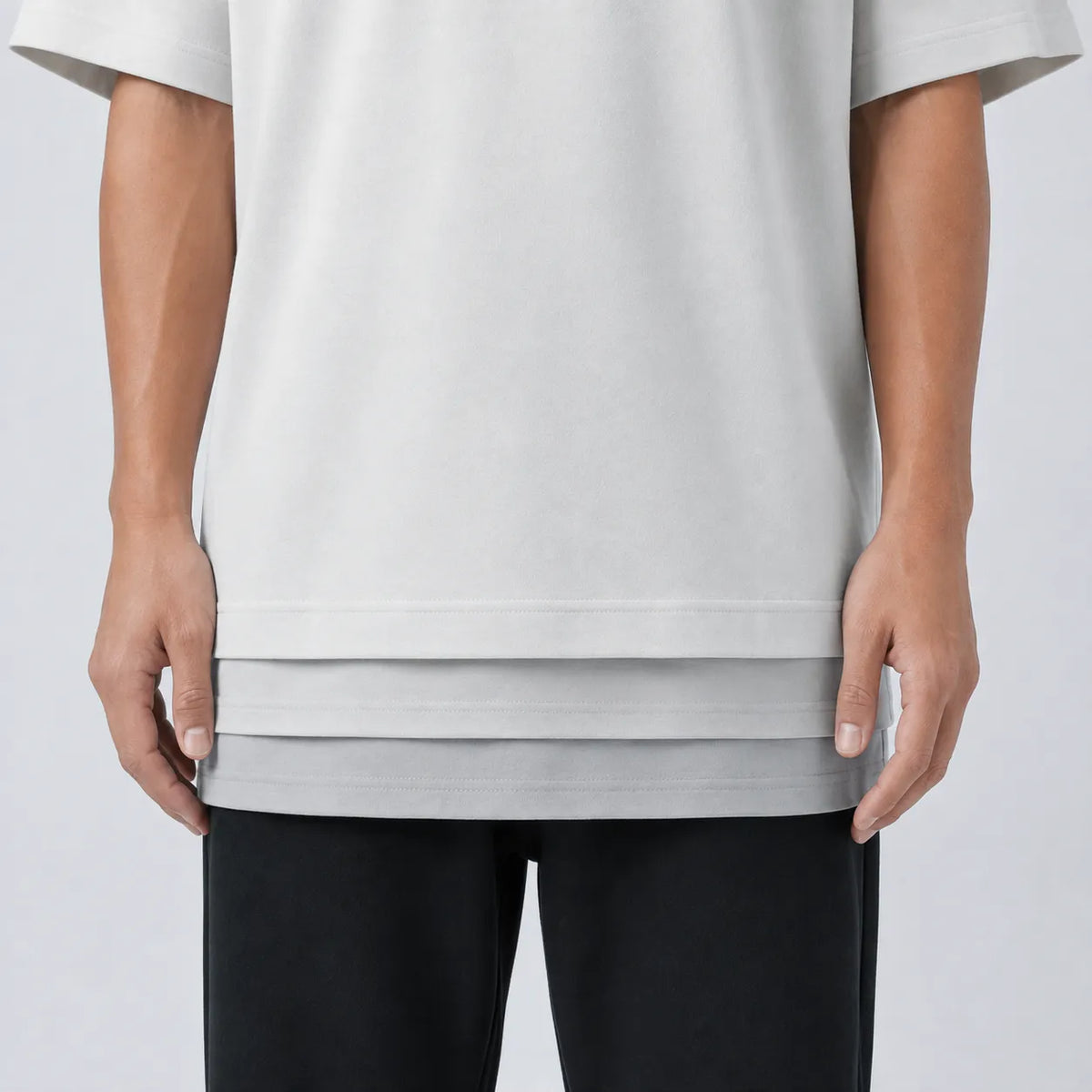
Custom Length
Choose standard, cropped or extended proportions for your collection.
Match the Print Method to the Artwork.
The best print method depends on artwork detail, color count, surface area, quantity, wash treatment and the hand-feel you want customers to experience.
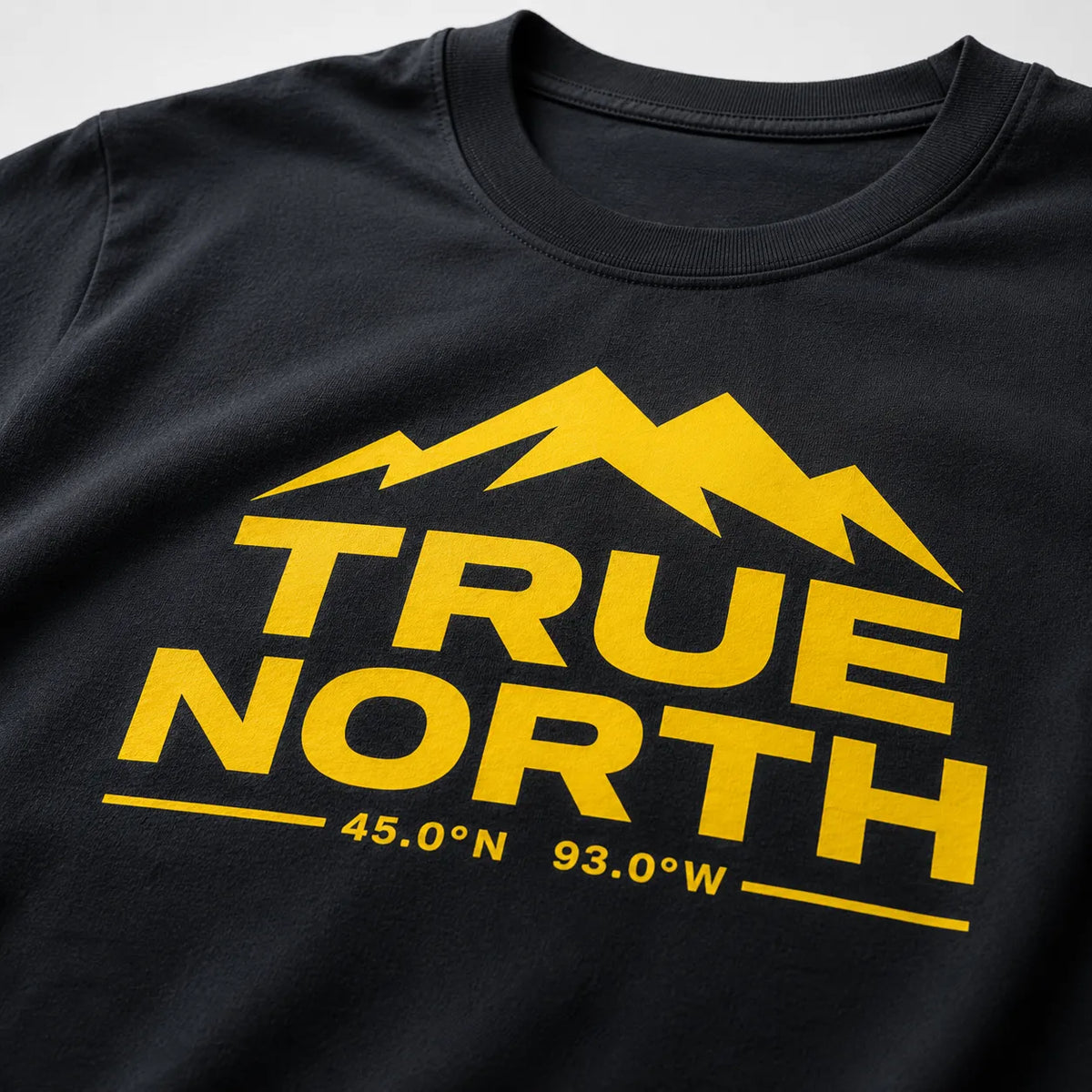
Screen Print
Bold, opaque color with strong durability. Ideal for logos, illustrations and high-impact front or back graphics.
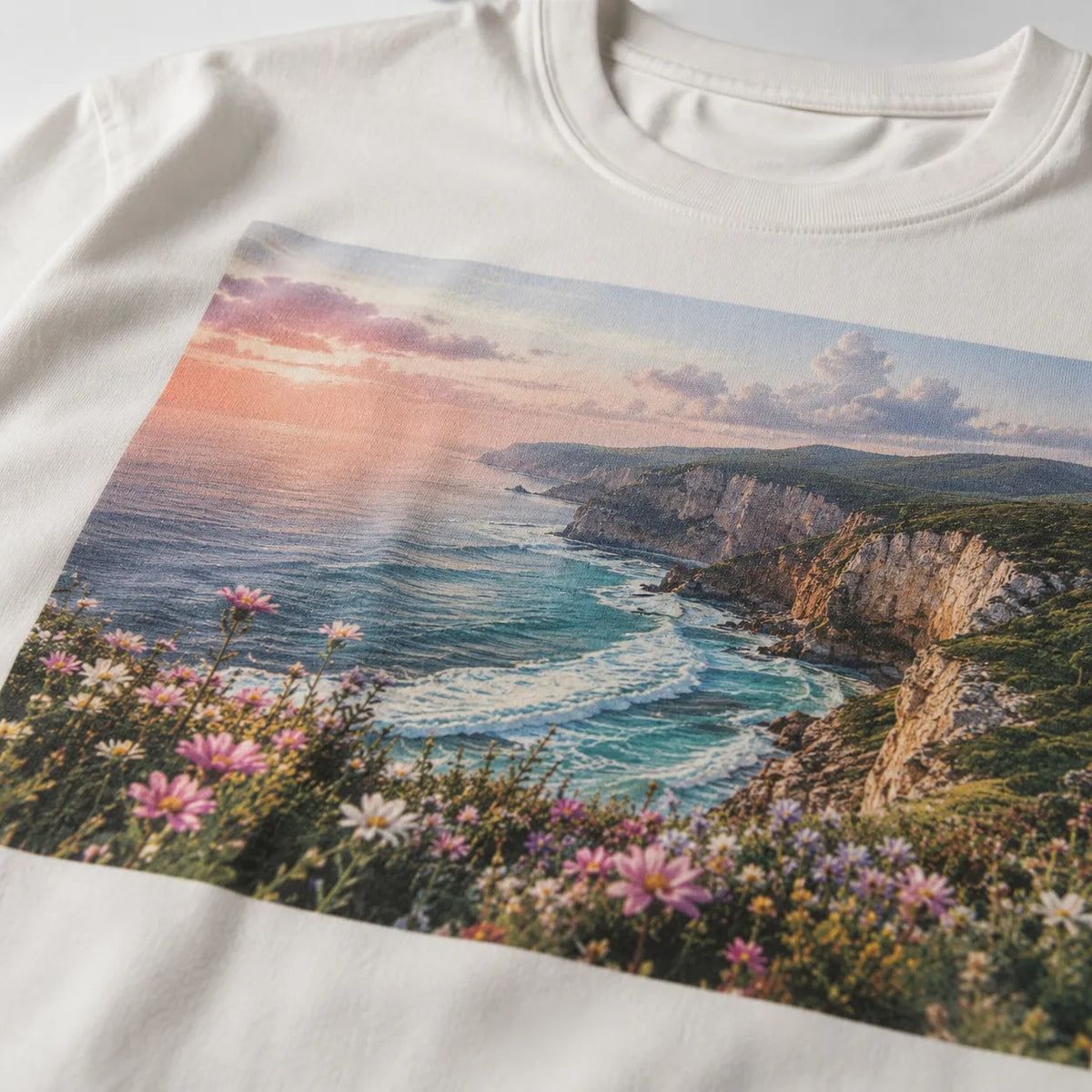
DTG
Suitable for detailed artwork, gradients and photographic color with a relatively soft surface feel.
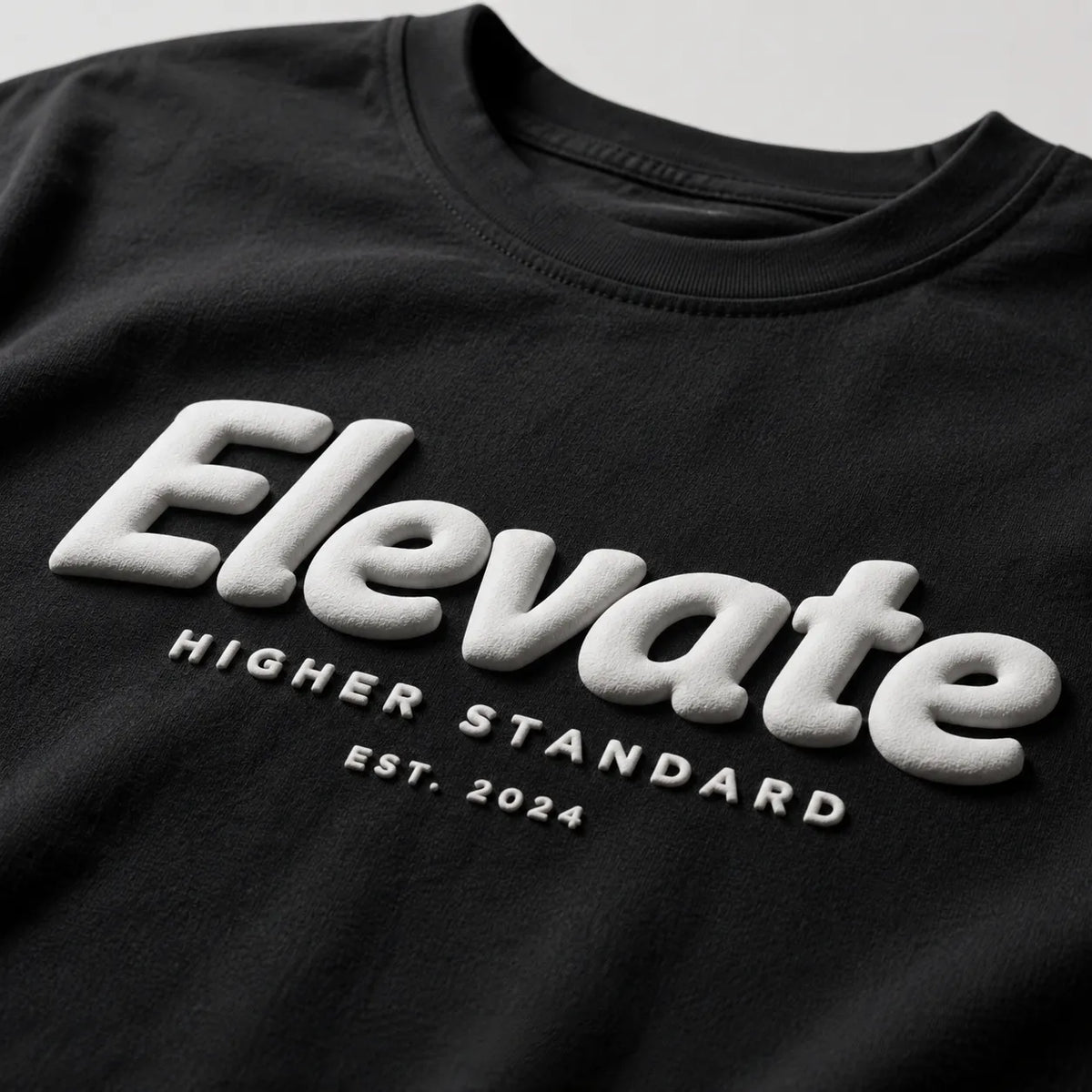
Puff Print
Creates a raised, tactile graphic. Best used deliberately on selected details rather than across every part of the artwork.
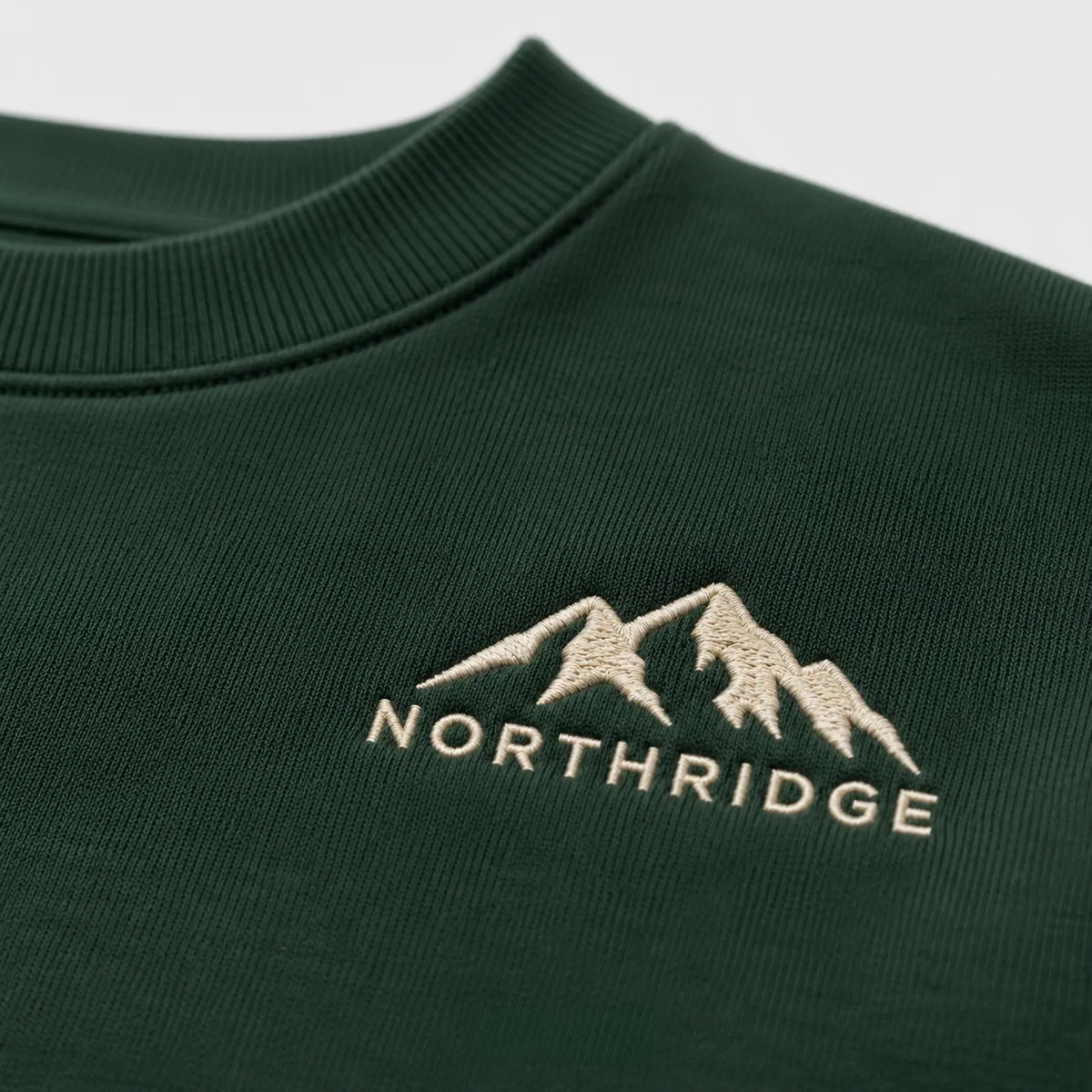
Embroidery
Adds texture and perceived value to logos, icons and smaller artwork placements.
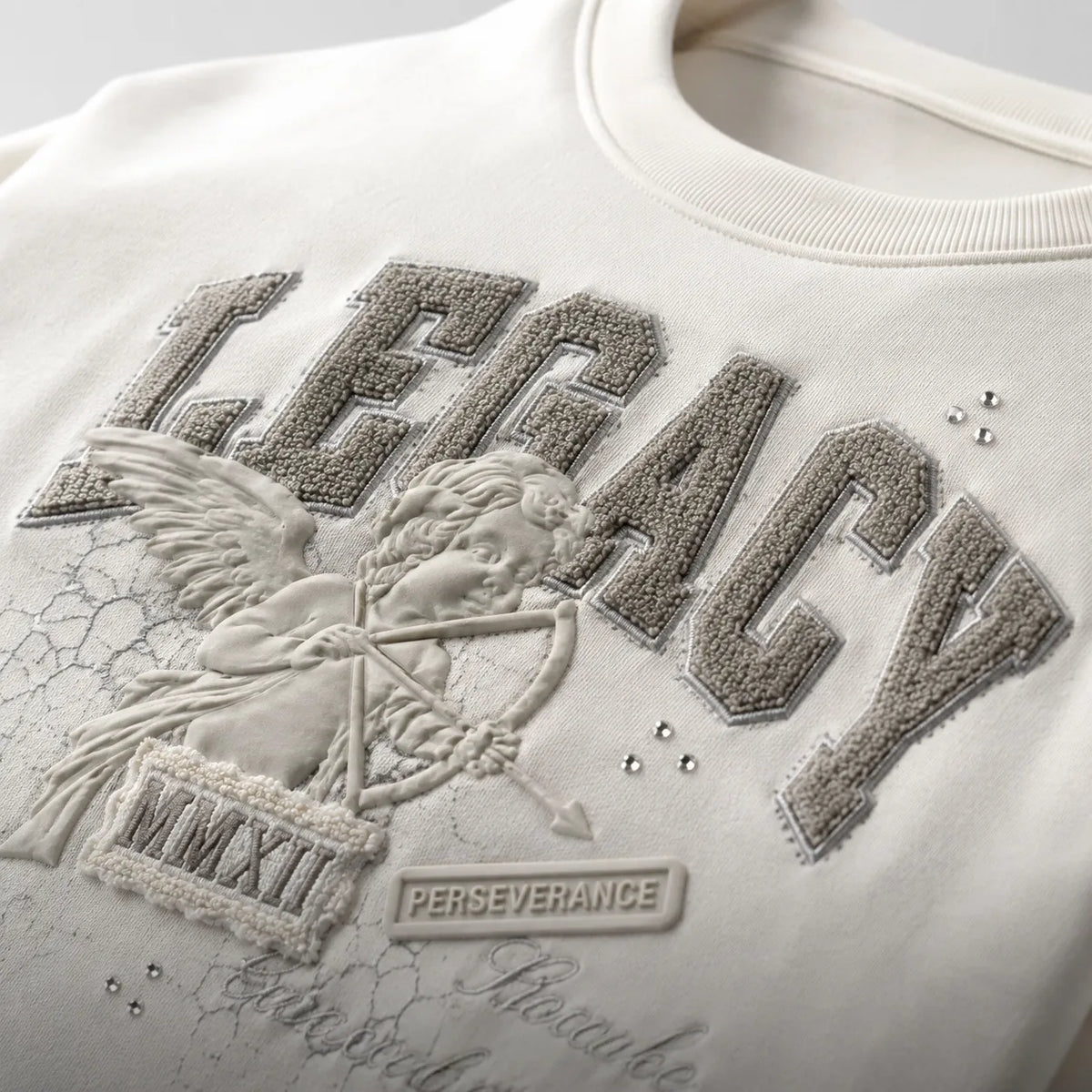
Specialty Finishes
Depending on the design: high-density print, discharge, cracked print, appliqué, chenille, silicone, rhinestones or mixed-media construction.
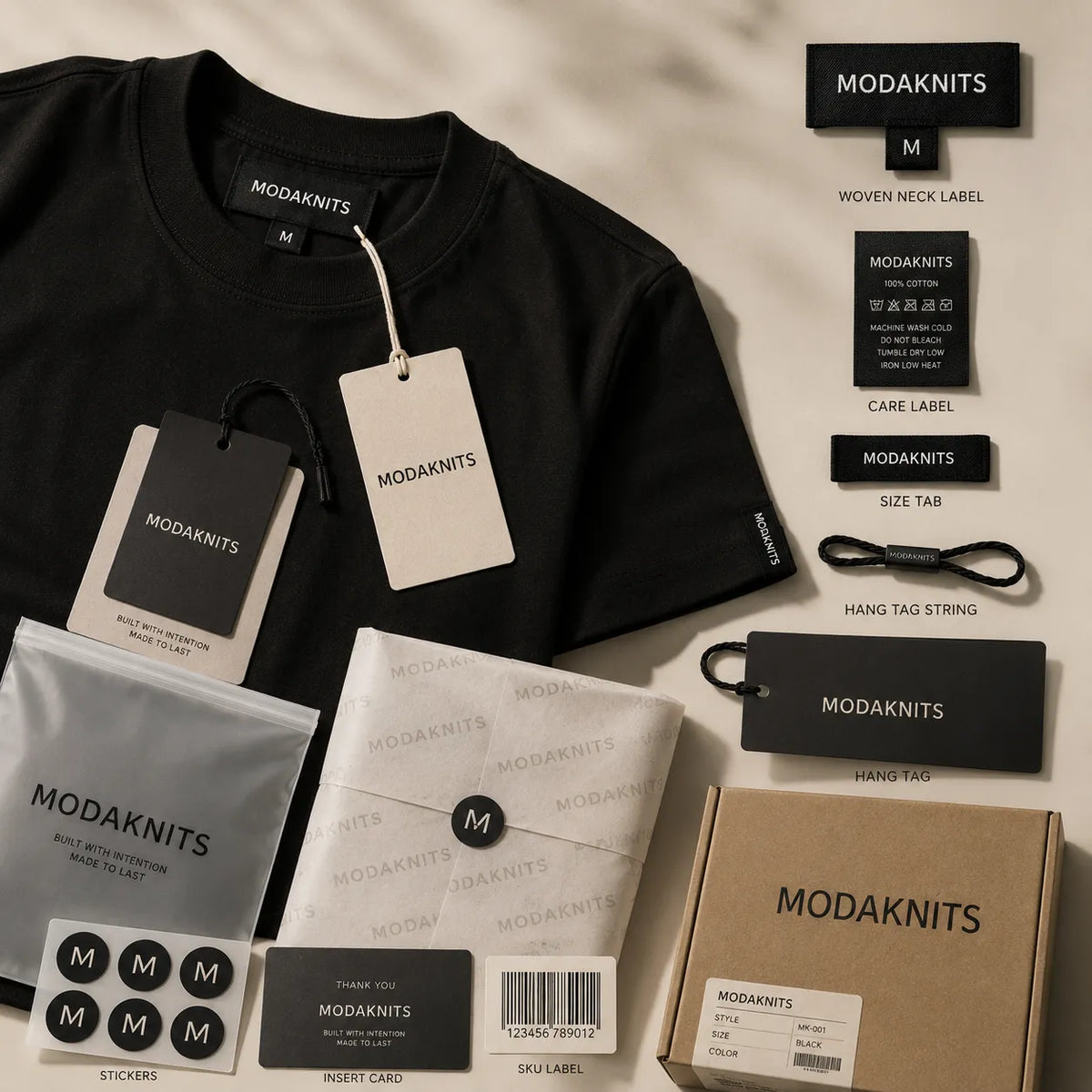
Every Detail Carries Your Name.
Neck Label · Care Label · Hang Tag · Fold · Retail Packaging
Private label production turns a custom T-shirt into a complete retail product.
Coordinate the garment, artwork and presentation through one brand system:
- Woven or printed neck labels
- Size tabs and care labels
- Inside-neck printing
- Custom hang tags
- Branded polybags
- Tissue paper, stickers and inserts
- Barcode and SKU labels
- Custom carton markings
Nothing should feel like an afterthought when your customer opens the order.
One Order. A Retail-Ready Graphic Tee.
Product Specification Review
We confirm quantity, fabric, GSM, fit, measurements, artwork placement, labels and delivery requirements.
Artwork and Production Review
Your artwork is checked for scale, color, print suitability and placement before sampling.
Custom Sample
A physical sample is produced to verify fabric, fit, print, wash and branded details before bulk.
Bulk Production
Cutting, sewing, decoration, finishing and packing follow the approved specification.
Quality Control
Measurements, construction, print placement, shade and packaging are checked before release.
Export-Ready Packing
Your finished order is packed by size and SKU for delivery to your studio, warehouse or fulfillment partner.
Match the Print Method to the Artwork.
The best print method depends on artwork detail, color count, surface area, quantity, wash treatment and the hand-feel you want customers to experience.
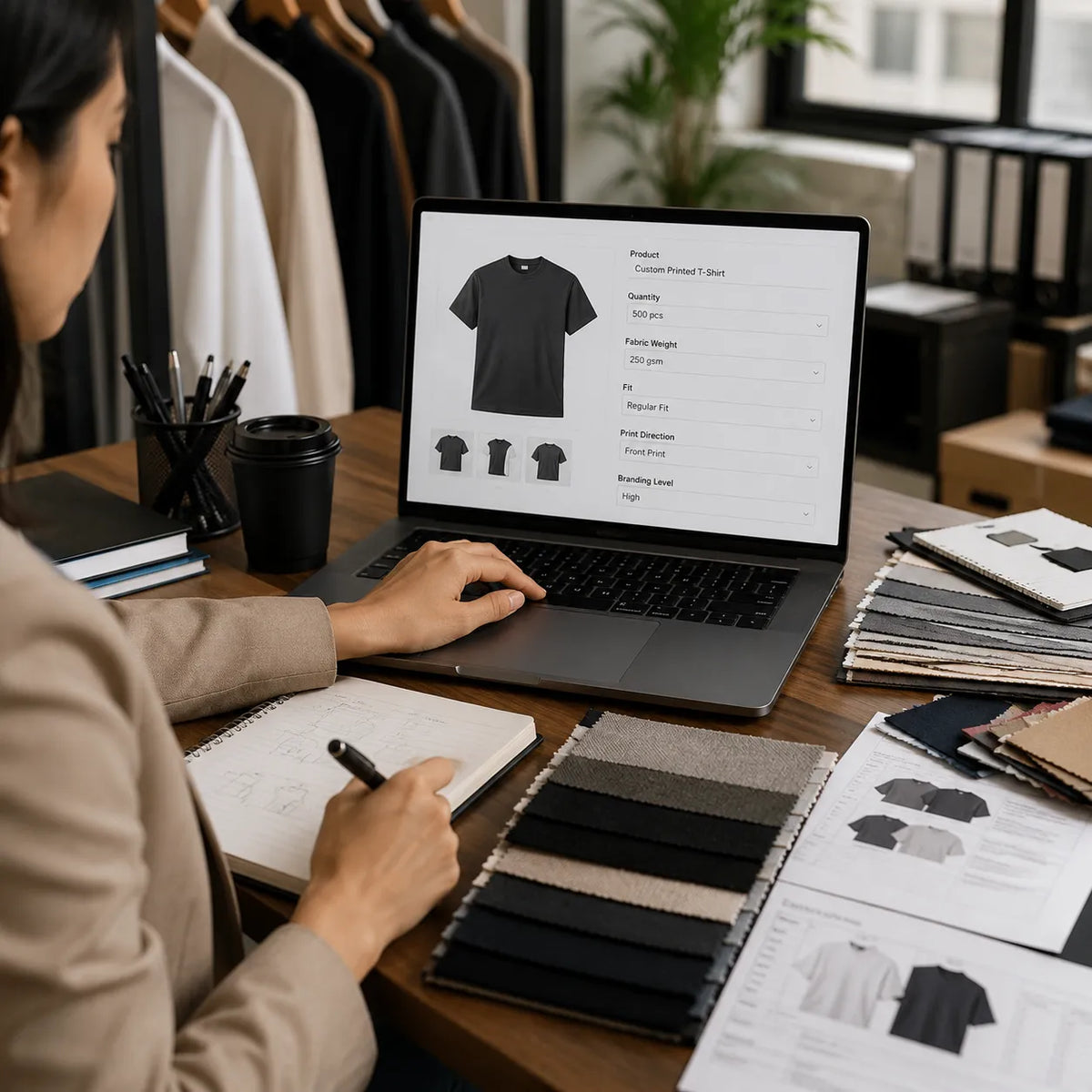
01 — Place Your Order
Choose the quantity, fabric weight, fit, print direction and branding level that best matches your project.
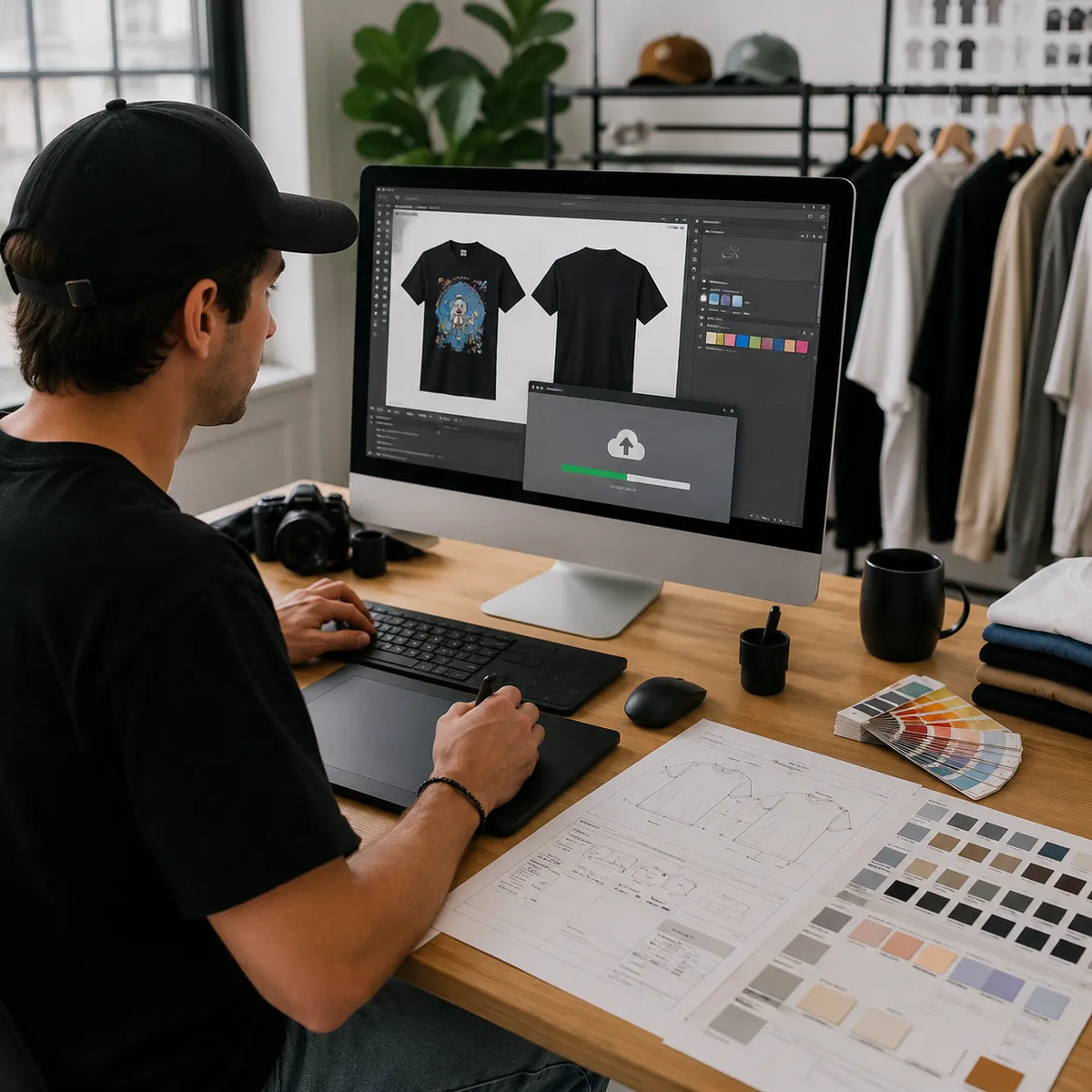
02 — Send Your Files
Upload your artwork, size specification, reference images or tech pack. If you do not have a tech pack, send a clear visual reference and required measurements.
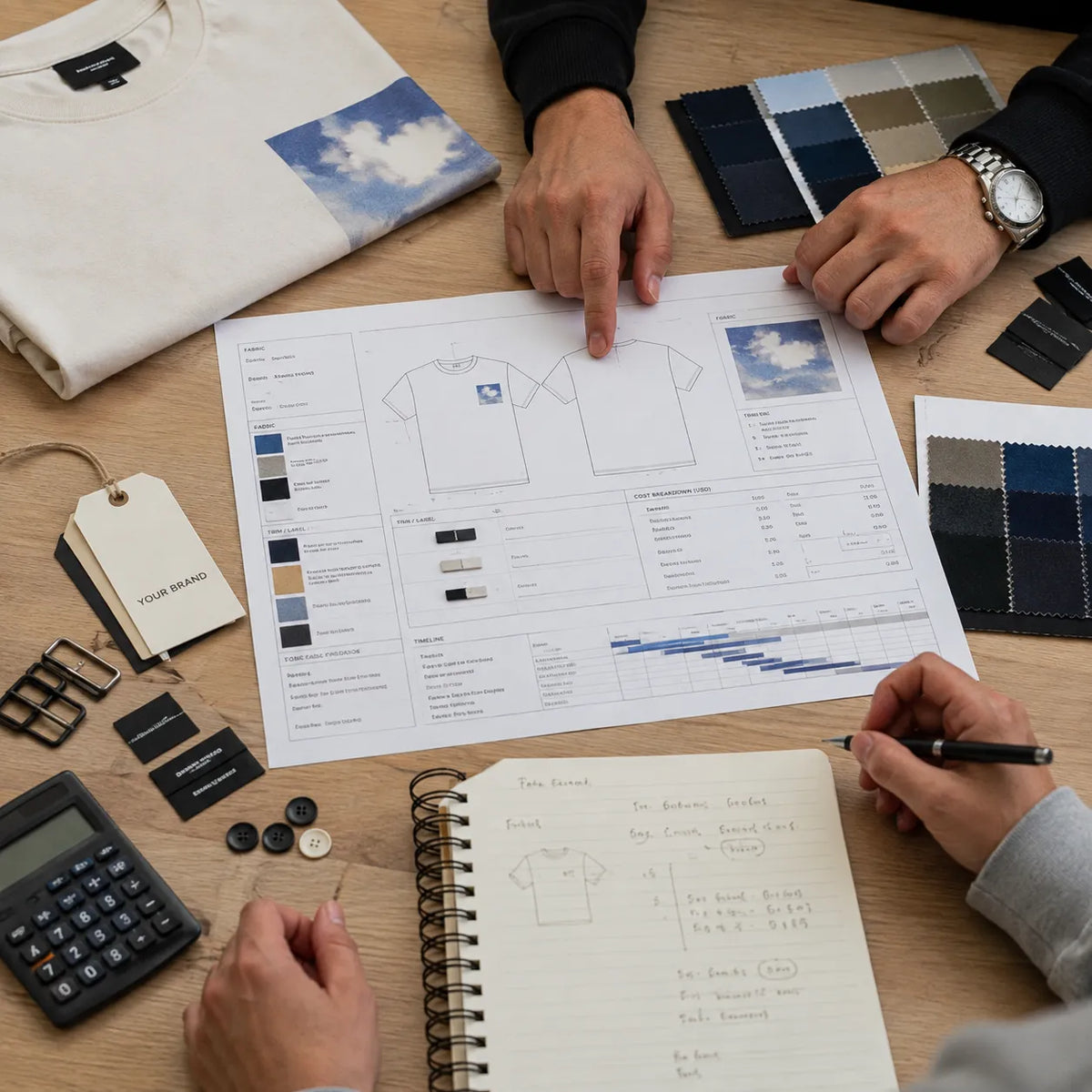
03 — Confirm the Production Specification
We review practical details and confirm the final fabric, fit, artwork placement, labels, cost and schedule.
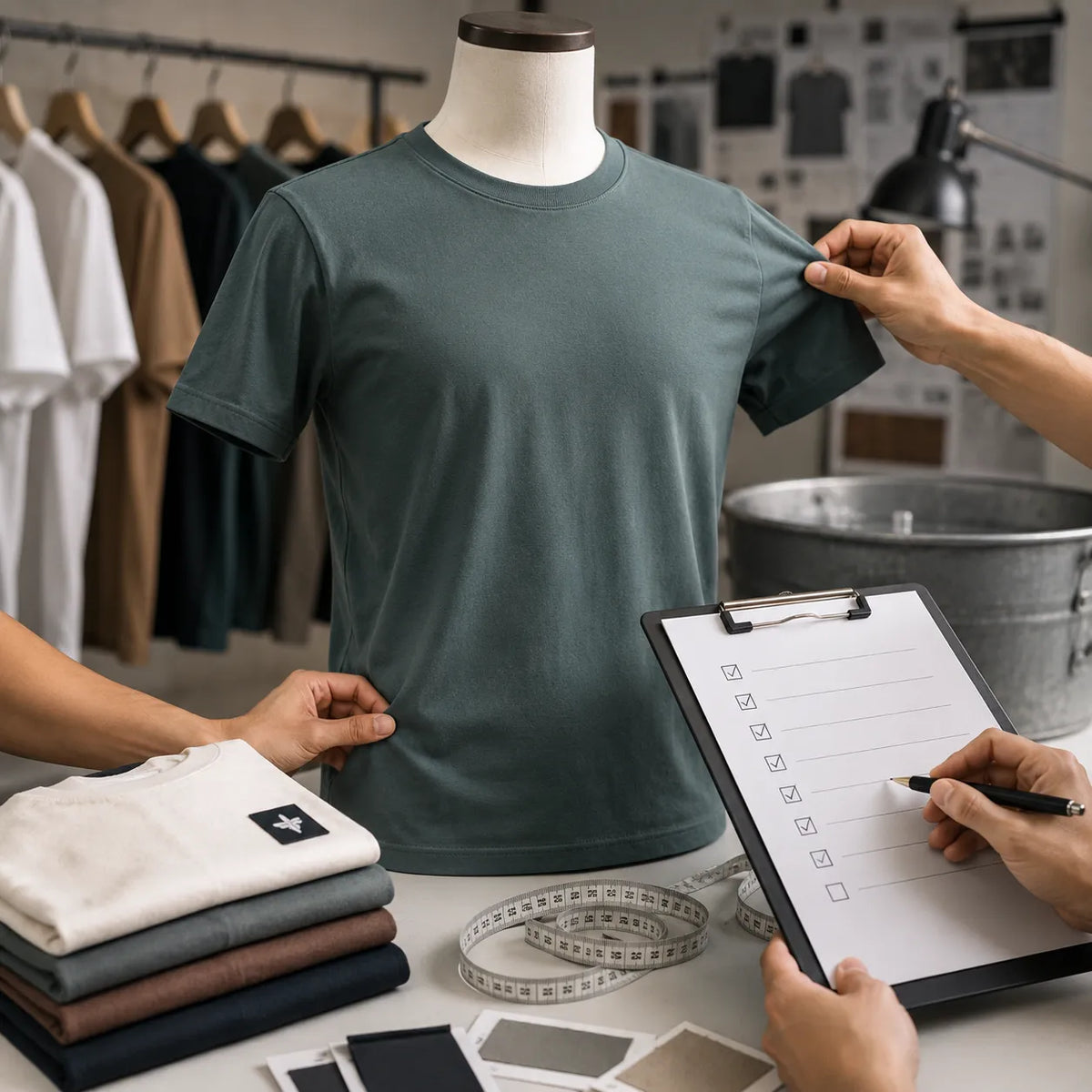
04 — Approve Your Sample
Check the physical garment for hand-feel, measurements, collar, artwork, wash and branding details.
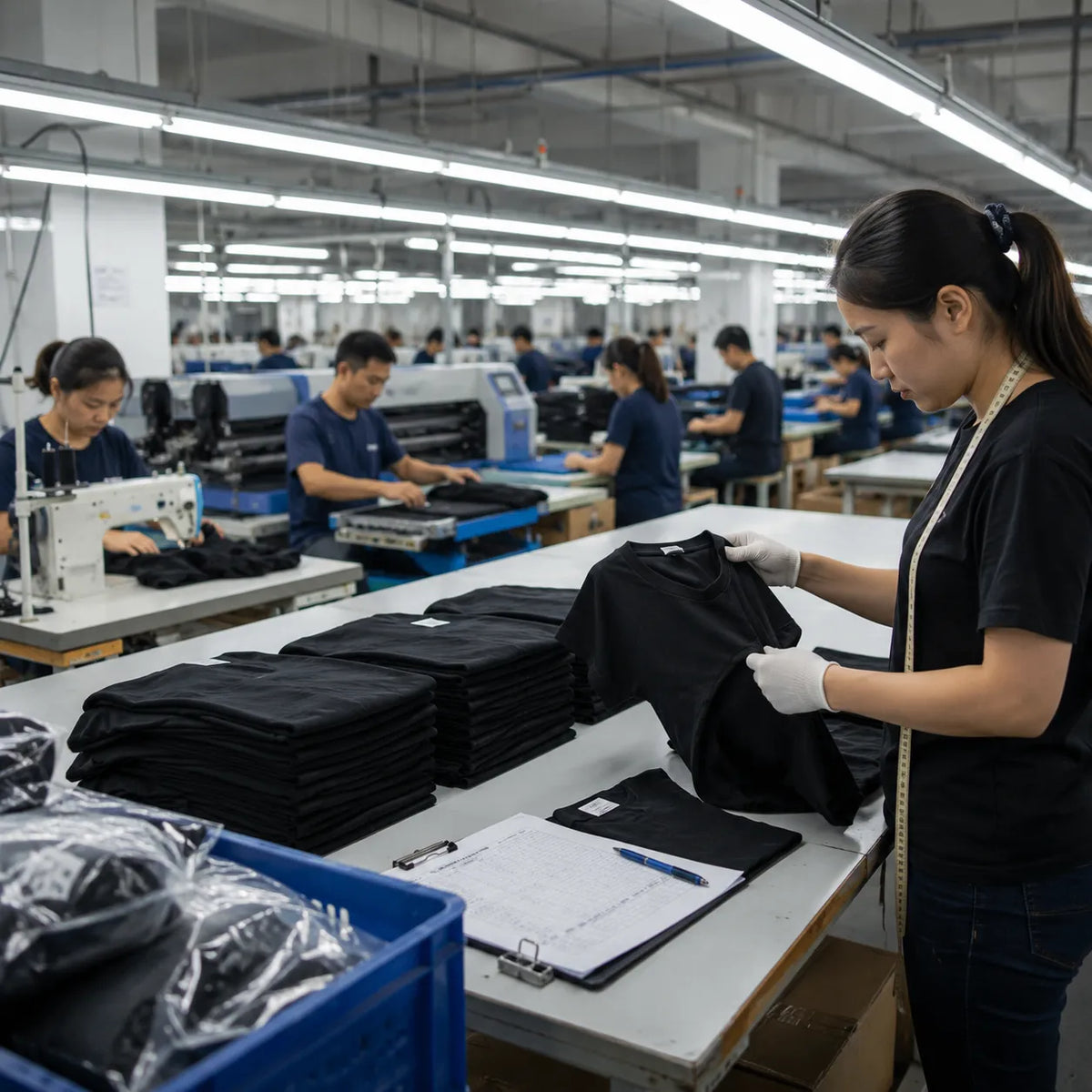
05 — Bulk Production and QC
Production follows the approved sample and specification, with inspections during manufacturing and before packing.
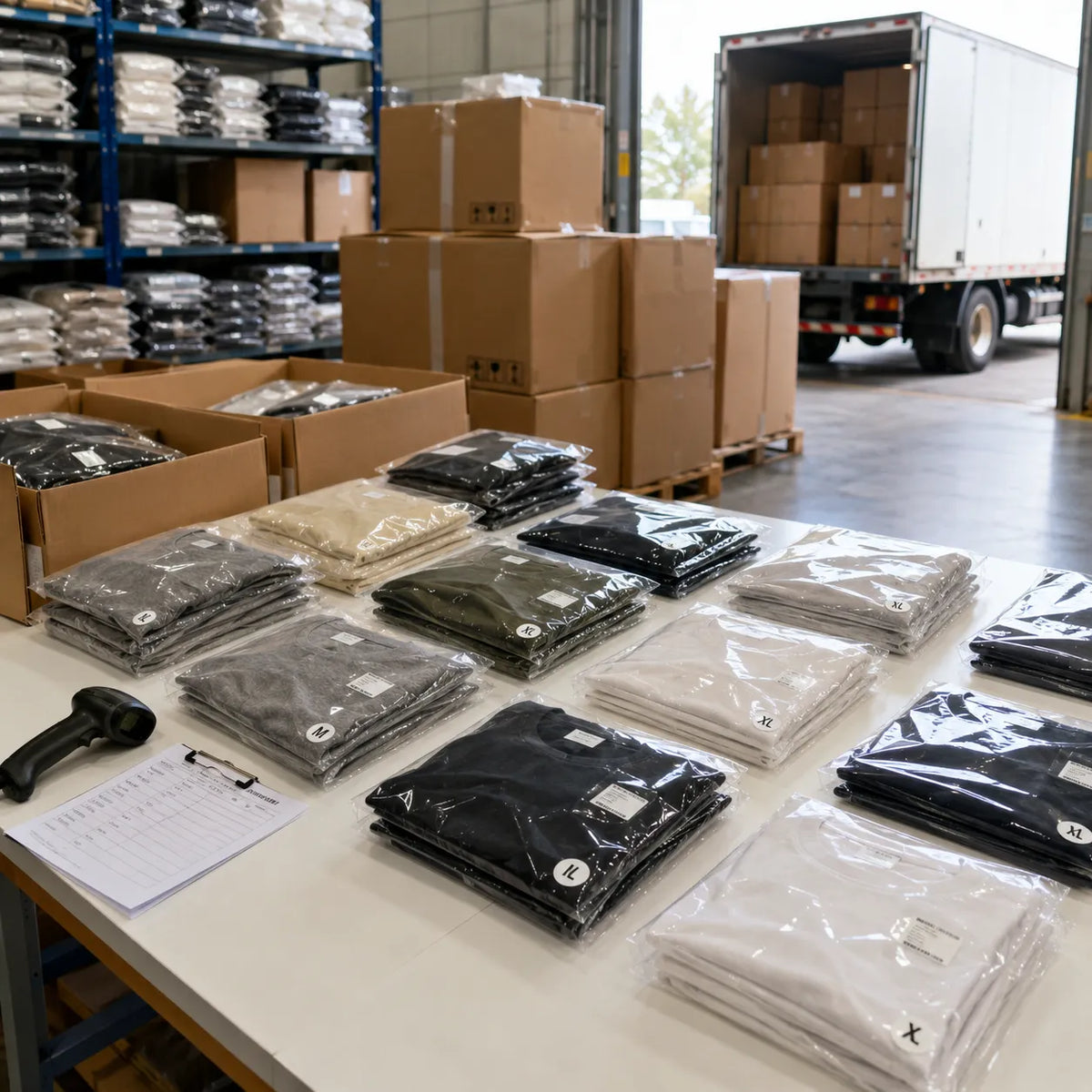
06 — Packing and Delivery
Finished pieces are packed by size and SKU, then shipped using the agreed delivery method.
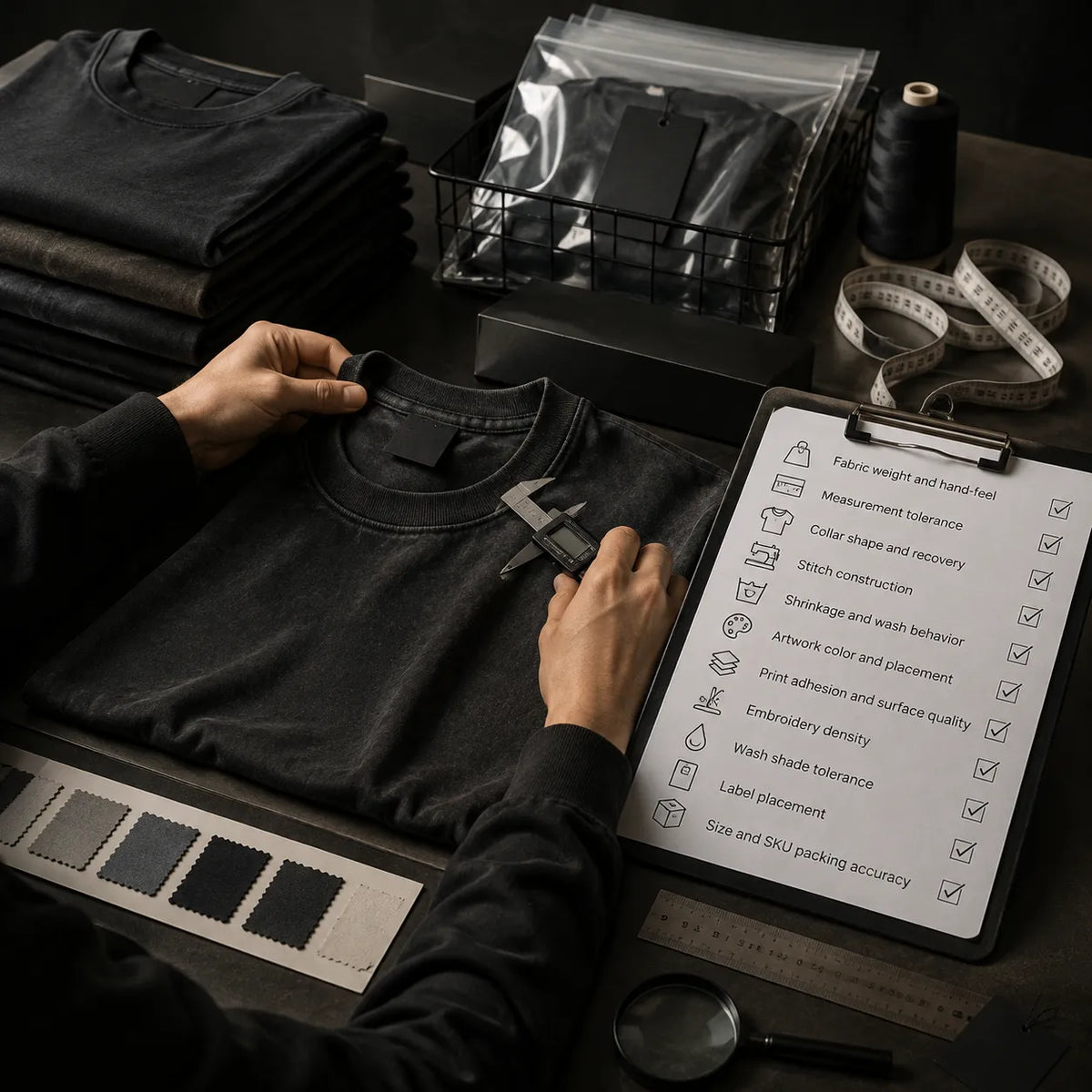
Quality Locked Before It Ships.
Keep one approved sample as the visual and measurement standard for bulk production and future reorders.
A heavyweight graphic tee is only premium when the details remain consistent across the full production run.
Our quality review covers:
- Fabric weight and hand-feel
- Measurement tolerance
- Collar shape and recovery
- Stitch construction
- Shrinkage and wash behavior
- Artwork color and placement
- Print adhesion and surface quality
- Embroidery density
- Wash shade tolerance
- Label placement
- Size and SKU packing accuracy
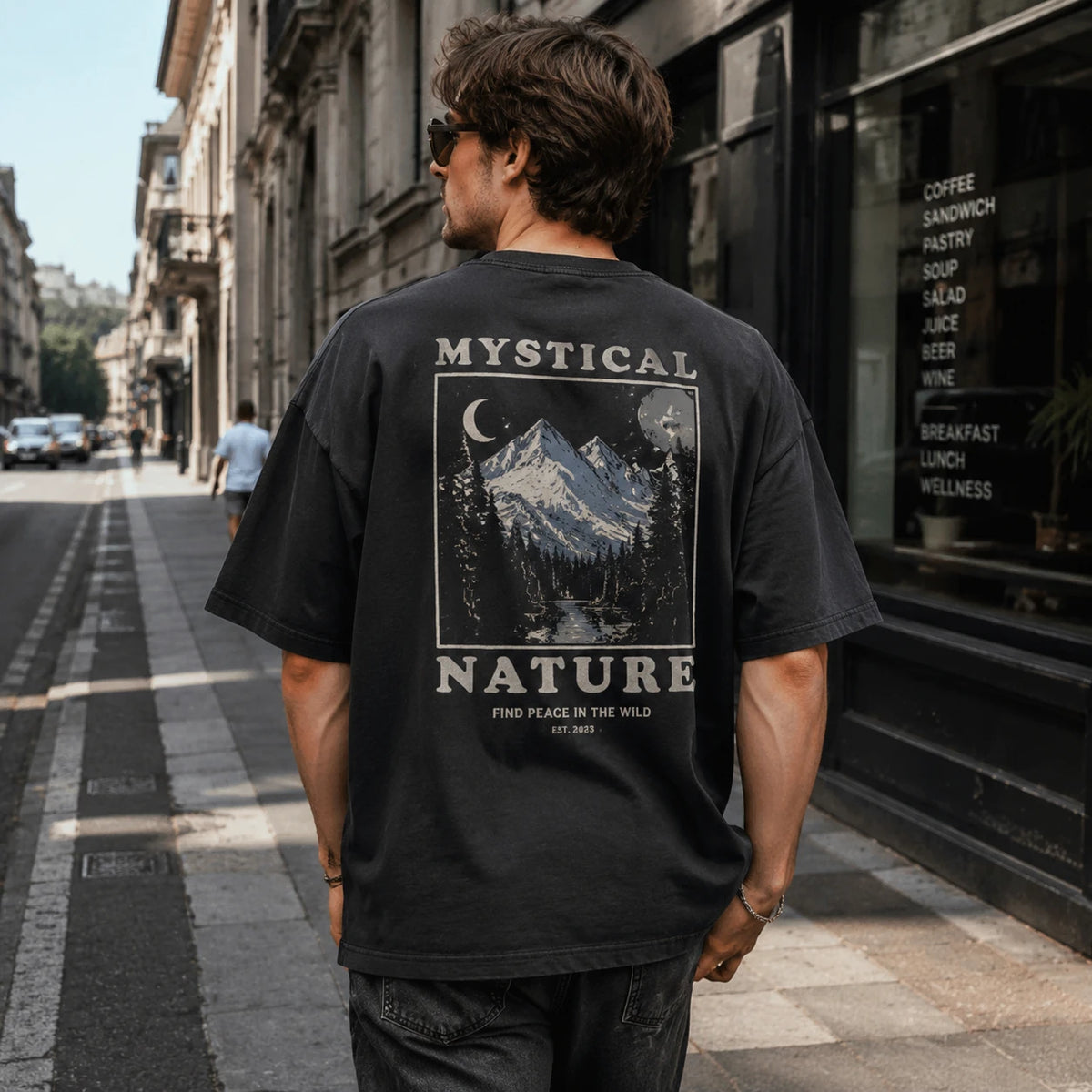
Core Heavyweight Graphic Tee
- Fabric: 100% Cotton, compact jersey
- Weight: 260 GSM
- Fit: Oversized / Drop Shoulder
- Artwork: Front small chest logo + oversized back graphic
- Technique: Screen Printing, 4-color
- Finish: Solid dyed, soft hand-feel wash
- Branding: Woven neck label + custom size label + individual polybag
- Quantity: 300–1,500 pcs per color
- Development note:
The main challenge was keeping the oversized back print smooth on a heavyweight fabric without creating a stiff, plastic hand-feel. We adjusted the ink layers and screen mesh during sampling to balance color coverage, durability and softness.
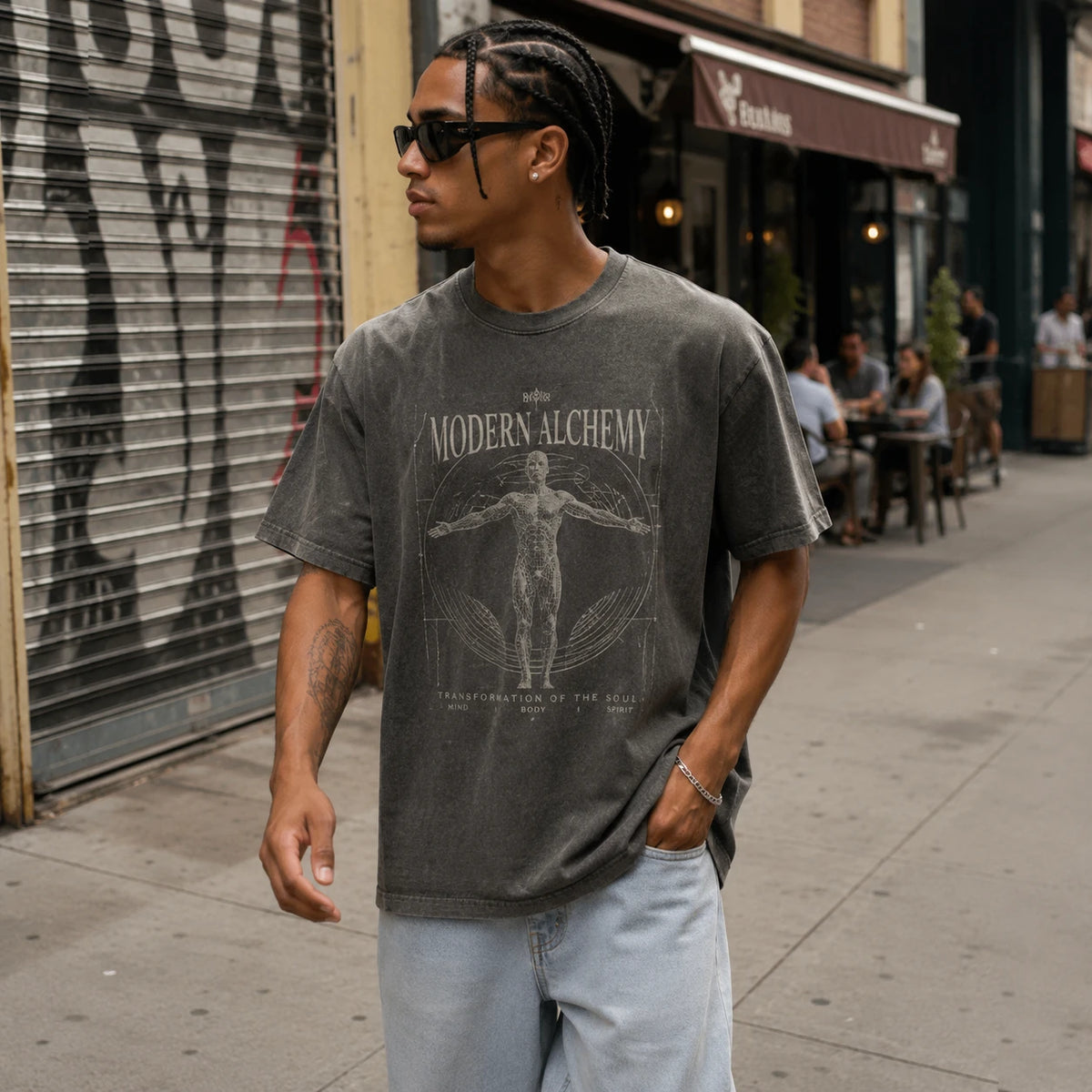
Vintage Wash Drop Tee
- Fabric: 100% Cotton, heavyweight jersey
- Weight: 240 GSM
- Fit: Boxy / Relaxed
- Artwork: Center chest graphic + large back artwork
- Technique: Screen Print + Puff Print
- Finish: Garment dyed + vintage wash
- Branding: Printed neck label + woven hem label + custom packaging
- Quantity: 200–1,000 pcs per style
- Development note:
The key challenge was controlling the final garment color after washing while keeping the puff print dimensional. We tested different wash times and curing settings to achieve a faded vintage look without weakening the print or causing excessive shrinkage.
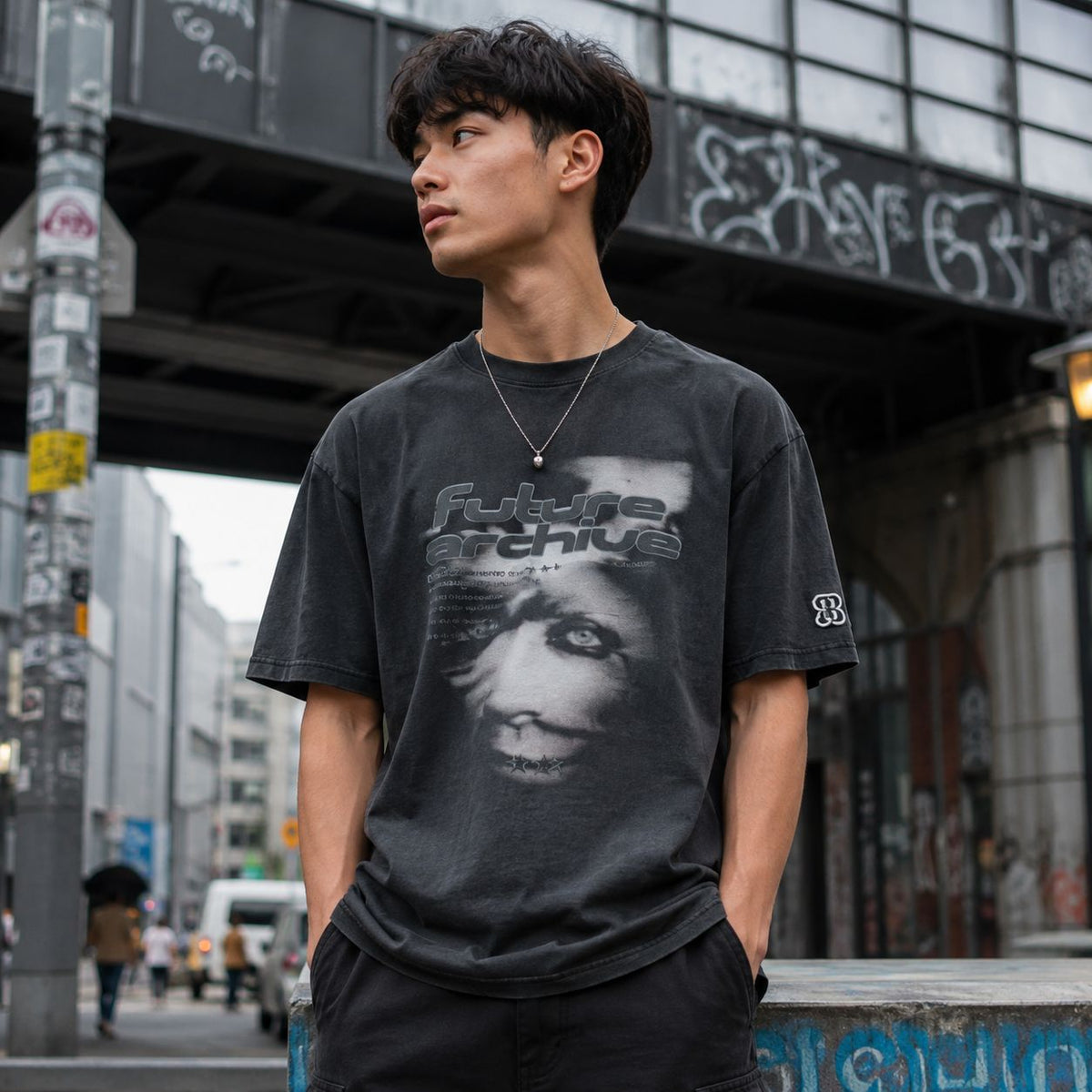
Multi-Technique Streetwear Capsule
- Fabric: Cotton jersey, selected by style
- Weight: 220–280 GSM
- Fit: Oversized / Boxy / Regular
- Artwork: Front, back and sleeve placements
- Technique: DTG + Screen Print + Puff + Embroidery
- Finish: Solid dye + selected garment wash
- Branding: Custom neck labels + woven labels + hangtags + branded packaging
- Quantity: 20-piece development test, followed by bulk production
- Development note:
The collection included multiple artwork styles and print placements, so the main challenge was matching each design with the right decoration technique. Fine illustrations were produced with DTG, bold graphics used screen printing, selected logos used puff or embroidery, and artwork dimensions were adjusted for different garment fits before bulk production.
Custom Heavyweight Graphic T-Shirt FAQs
What is the minimum order quantity?
Our recommended starting quantity is [verified MOQ] pieces per design and color. Special fabric dyeing, garment wash, mixed-media decoration or completely custom fabric may require a different minimum.
Can I order a sample before bulk production?
Yes. A physical sample allows you to review fabric weight, fit, measurements, artwork, wash and branding details before bulk production begins.
Can you work without a tech pack?
Yes. You can begin with artwork, reference images, a measurement chart or a physical garment. We will identify the missing production details before sampling. More complex custom constructions may still require a complete tech pack.
Which GSM is best for an oversized streetwear T-shirt?
There is no single correct weight. Around 240 GSM offers heavyweight substance with easier movement; approximately 280 GSM creates more structure; 300–320 GSM produces a firmer boxy silhouette. Climate, fit, print area and target price should be considered together.
Which print method is best for detailed artwork?
DTG is often suitable for detailed, multicolor or photographic artwork. Screen printing is generally preferred for bold, opaque graphics and repeat production. We review the artwork, quantity, fabric and desired hand-feel before recommending a method.
Can I combine print, embroidery and wash effects?
Yes, when the techniques are compatible. Combining methods can affect MOQ, sample time, cost, shrinkage and production sequence, so the complete finish should be sampled before bulk.
Do you offer custom neck labels and packaging?
Yes. Available private-label options can include woven or printed neck labels, care labels, size tabs, hang tags, polybags, inserts, barcode labels and custom carton markings.
How long does sampling and bulk production take?
A standard sample generally requires [verified sample time]. Bulk production generally requires [verified bulk lead time] after sample approval and final specification confirmation. Complex washes, custom dyeing or specialty decoration can require additional time.
Will washed T-shirts all look exactly the same?
Garment washing naturally creates some shade and surface variation. The approved sample defines the intended direction, while an agreed tolerance is used to control unacceptable variation.
What artwork files should I provide?
Vector artwork such as AI, EPS or editable PDF is preferred for screen printing and embroidery development. High-resolution PSD, TIFF or PNG files may be suitable for DTG. Include artwork dimensions, placement and Pantone references where applicable.
What happens after I place the order online?
We review your selections and files, confirm the full production specification, prepare the required proof or sample and obtain approval before bulk production.
Can you reproduce the same product for a reorder?
Approved patterns, measurements, artwork placement and production specifications can be retained for reorders. Fabric and wash lots should still be checked because raw-material batches may vary.
If you have any questions, you are always welcome to contact us. We'll get back to you as soon as possible, within 24 hours on weekdays.
-
Shipping Information
Use this text to answer questions in as much detail as possible for your customers.
-
Customer Support
Use this text to answer questions in as much detail as possible for your customers.
-
FAQ’s
Use this text to answer questions in as much detail as possible for your customers.
-
Contact Us
Use this text to answer questions in as much detail as possible for your customers.